Was sind die Nearshoring-Herausforderungen für Mexiko?
Derzeit verlagern zahlreiche globale Konzerne ihre Produktion nach Mexiko oder erweitern ihre Fertigungskapazitäten im Land. Dies befeuert eine robuste Nachfrage nach Investitionsgütern: Im ersten Quartal 2023 stiegen die Investitionen in Maschinen und Ausrüstungen um 17,6 Prozent im Vergleich zum gleichen Zeitraum des Vorjahres.
Im Jahr 2022 flossen insgesamt 35,3 Milliarden US-Dollar (US$) an ausländischen Direktinvestitionen (FDI) in das Land. Dies stellt das dritthöchste Niveau dar, das jemals verzeichnet wurde, nach den Jahren 2013 und 2015. Mittelfristig könnte Mexiko laut der Unternehmensberatung Deloitte potenziell bis zu 60 Milliarden US-Dollar an FDI anziehen.
Die 5 Herausforderungen des Nearshorings in Mexiko
Diese vielversprechenden Fakten sind ein positives Signal für das Land. Welchen Herausforderungen sieht sich Mexiko jedoch angesichts aller Anforderungen gegenüber? Wir haben einige der wichtigsten 5 Herausforderungen aufgelistet:
Steigende Arbeitskosten:
Einer der Hauptfaktoren, der Unternehmen dazu veranlasst, ihre Fertigungsoperationen nach Mexiko zu verlagern, sind die wettbewerbsfähigen Arbeitskosten. Im Gegensatz zu den steigenden Arbeitskosten in China bietet Mexiko eine kostengünstigere Option. Wie aus der folgenden Grafik ersichtlich ist, ist der durchschnittliche Lohn eines Produktionsarbeiters in China in den letzten Jahren auf etwa 3,50 US-Dollar pro Stunde gestiegen, während er in Mexiko bei rund 2,50 US-Dollar pro Stunde bleibt.
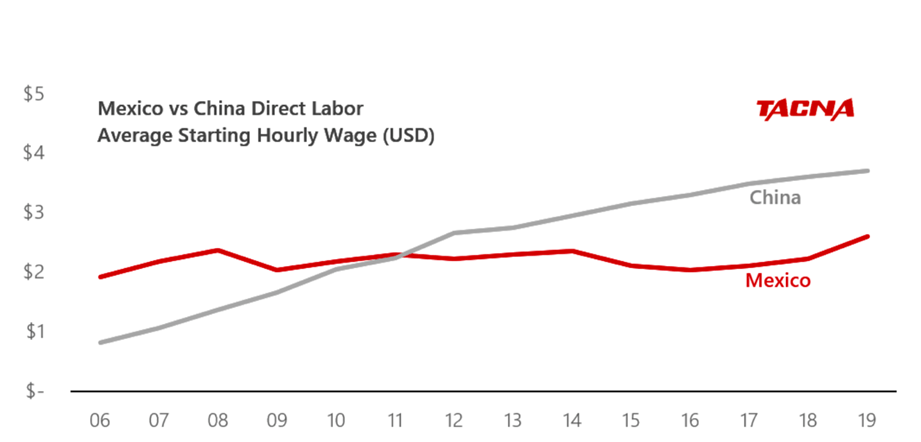
Dieser Lohnvorteil hat große Player wie Ford und Apple dazu verleitet, ihre Produktion nach Mexiko zu verlagern, in der Erwartung jährlicher Einsparungen in Höhe von Hunderten Millionen Dollar.
Mexiko muss jedoch darauf achten, nicht den Weg Chinas zu gehen, wo steigende Arbeitskosten eine Herausforderung für den Fertigungssektor des Landes darstellen. Während sich die Lebensqualität in Mexiko verbessert und die Löhne steigen, muss das Land einen Ausgleich zwischen höheren Löhnen für seine Arbeitskräfte und der Aufrechterhaltung einer kostengünstigen Produktion finden.
Bedarf an qualifizierten Arbeitskräften
Obwohl Mexiko wettbewerbsfähige Lohnkosten bietet, muss es sich auch darauf konzentrieren, eine qualifizierte Arbeitskraft aufzubauen. Die Nearshoring-Industrie erfordert nicht nur Fabrikarbeiter, sondern auch Ingenieure, Techniker und Logistikexperten. Um den Anforderungen der modernen Fertigung gerecht zu werden, muss Mexiko in Bildungs- und Ausbildungsprogramme investieren, die eine Arbeitskraft hervorbringen können, die in der Lage ist, fortschrittliche Produktionsprozesse zu betreiben und zu verwalten.
Regionale Unterschiede bezüglich Nearshoring Boom
Der Nearshoring-Erfolg Mexikos ist im ganzen Land nicht gleichmäßig verteilt. Bestimmte Regionen wie Nuevo León, Sinaloa, Aguascalientes und Coahuila zeichnen sich als günstige Standorte aus, aufgrund ihrer qualifizierten Arbeitskräfte, besseren Arbeitsbedingungen und entwickelten Infrastruktur. Im Gegensatz dazu haben Staaten wie Guerrero und Oaxaca Schwierigkeiten, Investitionen anzuziehen, aufgrund mangelnder qualifizierter Arbeitskräfte, unzureichender Transportinfrastruktur und begrenzter Bildungseinrichtungen, die auf die Bedürfnisse der Nearshoring-Industrie ausgerichtet sind.
Das folgende Bild zeigt den Prozentsatz der Konzentration von Produktionszentren in Staaten wie Nuevo León, Coahuila und Chihuahua.
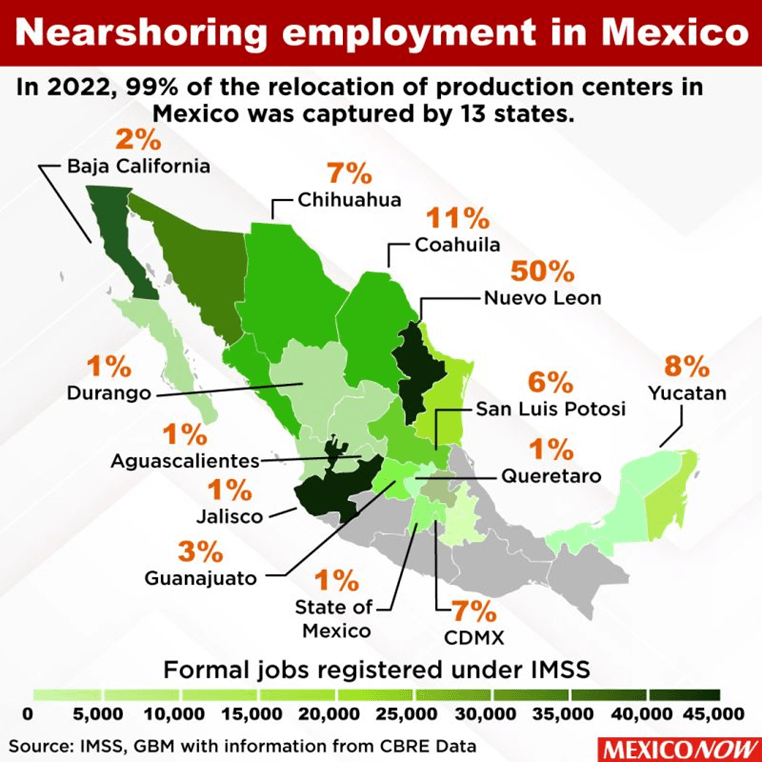
Mexikos Aufstieg als Nearshoring-Zentrum geht nicht ohne seine arbeitsbezogenen Herausforderungen einher. Obwohl das Land wettbewerbsfähige Arbeitskosten und reichlich Sonnenlicht für erneuerbare Energien bietet, muss es steigenden Arbeitskosten navigieren, in die Entwicklung der Arbeitskräfte investieren und regionale Disparitäten angehen.
Infrastruktur
Die Rolle Mexikos als Nearshoring-Ziel rückt immer stärker in den Vordergrund, angetrieben von verschiedenen Faktoren, darunter das Wachstum des E-Commerce und die Notwendigkeit kostengünstiger Fertigungslösungen. Mexiko steht jedoch vor erheblichen Infrastrukturproblemen, die angegangen werden müssen, um sein Nearshoring-Potenzial voll auszuschöpfen.
Industriebaulücken
Mexiko hat derzeit einen Mangel von 11 Millionen Quadratmetern an Industrielagern, und die Nachfrage nach solchen Räumen für Nearshoring wird in diesem Jahr voraussichtlich 2,5 Millionen Quadratmeter erreichen. Um Investitionen anzuziehen und das Wachstum neuer Branchen zu ermöglichen, ist es entscheidend, diesen Lagermangel anzugehen. Darüber hinaus behindern Infrastrukturmängel in Bereichen wie Elektrizität, Wasser, Transport und Informationstechnologie die Entwicklung des Landes. Ohne angemessene Infrastruktur kann Mexiko seine geografischen Vorteile nicht vollständig nutzen.
Die Nachfrage nach Industrieraum erreicht einen Höchststand
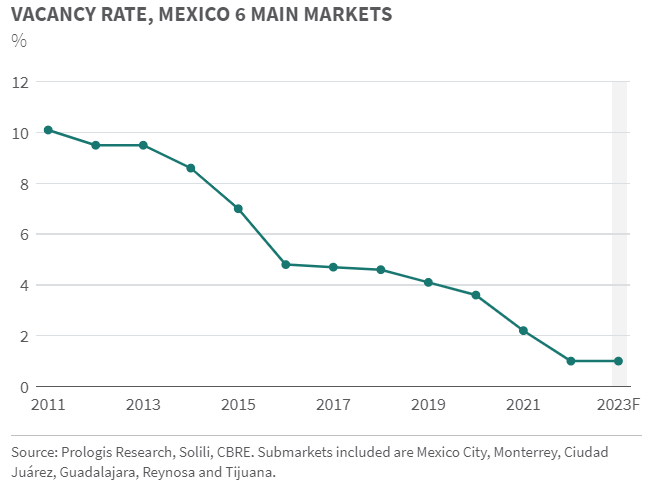
Die Forschung von Prologis zeigt, dass die äußerst begrenzte Verfügbarkeit von Raum, die im ersten Quartal 2023 bei 1,1% lag, im Gegensatz zum durchschnittlichen Wert von 6% während der Expansionsperiode von 2013-2019, die zukünftige Nachfrage antreibt. Derzeit sind bereits 60% des im Bau befindlichen Raums vorvermietet, ein deutlicher Anstieg gegenüber der Vorvermietungsrate von 36% im Jahr 2019. Neben den Herausforderungen im Zusammenhang mit der Bereitstellung neuer Angebote auf dem Markt führte diese geringe Leerstandsquote zu dem höchsten in einem Jahrzehnt verzeichneten Mietwachstum, das 2022 16% erreichte. Prologis geht davon aus, dass das zweistellige Mietwachstum bis ins Jahr 2023 anhalten wird.
Developing new Industrial Parks and Industrial Buildings to Attract Investment
To attract industrial clients and foster the adoption of new technologies, Mexico needs to develop lands with suitable infrastructure. Many industrial parks struggle to meet the energy and water requirements of certain industries, impeding their growth. A robust and comprehensive infrastructure development plan is essential to ensure that the country can accommodate the needs of nearshoring businesses.
High Demand for Logistics Spaces
The rise of e-commerce in Mexico, particularly since the onset of the Covid-19 pandemic, has led to the creation of 2,100 companies specializing in warehousing and deliveries. This surge in demand for logistics spaces and warehouses is expected to continue. Large retail companies are also increasingly focusing on expanding their online sales, further driving the need for logistics facilities. However, developers face the challenge of finding suitable locations with optimal infrastructure for constructing these projects.
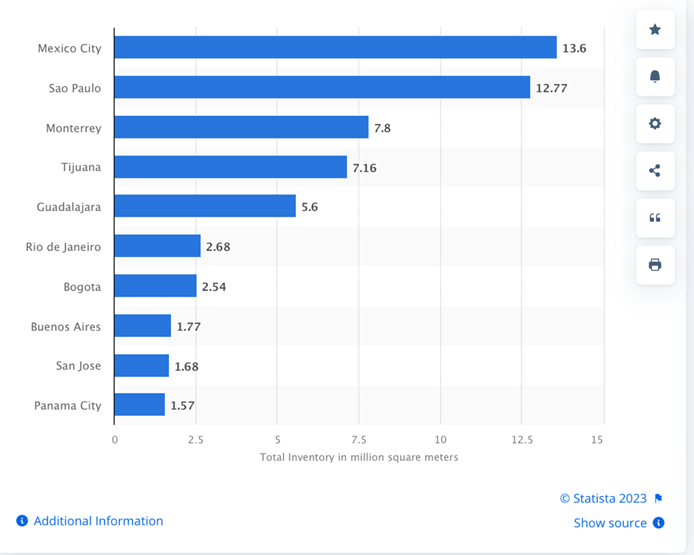
The graphic shows a comparison of the volume of industrial and logistic real estate space between important LATAM cities, we can observe that Mexican cities appear on the top 5.
Growth of E-commerce Sector
Large retail companies are increasingly focused on boosting their online sales, which is expected to further increase the demand for logistics spaces in the e-commerce sector.
Indeed, the e-commerce sector is playing an increasingly important role in the demand for industrial spaces in Mexico and its nearshoring boom. With the exponential growth of online sales and the emergence of new companies dedicated to logistics and deliveries, there is a need for adequate logistics infrastructure to meet this ever-expanding demand.
As an example of this phenomenon, we have Mercado Libre, a global e-commerce giant and one of the main e-commerce platforms in Mexico. The company has experienced significant growth and has invested in building a strong logistics network. In the last four years, the company has multiplied its business volume in the country by six times and has established 90 warehouses and service points in Mexico, ranging in size from 2,000 to 100,000 square meters.
Connectivity and Innovation
To remain attractive to foreign investment in various industrial sectors, Mexico must focus on improving connectivity in its logistics infrastructure. This includes expanding port capacity, enhancing road and rail networks, transitioning to cleaner energy sources, and advancing telecommunications, including the expansion of 5G connectivity. Additionally, fostering innovation in technology and manufacturing can provide Mexico with a competitive edge, particularly in high-tech industries such as microprocessors.
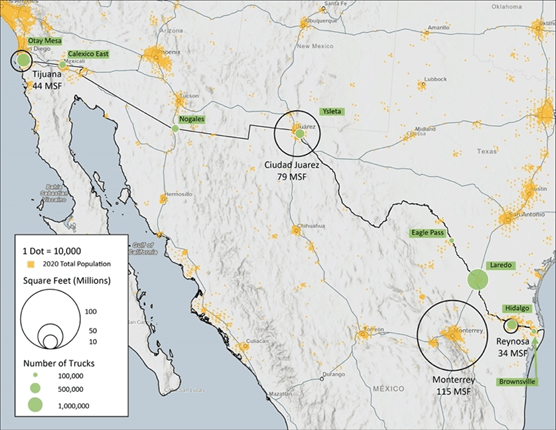
It is shown on the map the logistic market square footage, number of annual cargo land border crossings and the population in 2020 in northern Mexico. The country’s proximity with the US is an advantage, Mexico needs to improve its connectivity.
Efficient Supply Chain Management
Efficient supply chain management is a critical challenge in the context of nearshoring, especially in the construction sector. Outsourcing services to providers in different geographic regions require a seamless and reliable logistics and transportation system. Mexico benefits from its strategic location near the United States, a major source of companies with extensive supply chains. Furthermore, the US-Mexico-Canada Agreement (T-MEC) offers competitive advantages for nearshoring. The expansion of freight railroads can significantly benefit the construction sector by improving sustainability and cargo capacity.
Energy
One of the primary challenges facing Mexico's nearshoring strategy is ensuring a reliable energy supply. The director of Sustainable Economy at the Mexican Institute for Competitiveness (IMCO), Jesús Carrillo, highlights that Mexico's energy supply, including electricity and water, poses significant challenges. The national power grid's saturation, particularly in the northern and central regions of the country, is a widespread issue that needs to be addressed. Indeed, limitations of Mexico’s federal transmission grid have forced real estate developers to build alternative infrastructure, leading to delays for companies with larger electricity requirements.
To support the growing demand, there is a pressing need to develop additional energy transmission infrastructure and build clean and renewable energy generation facilities. Specialized technology companies and those focused on electromobility will require more energy, potentially leading to an annual demand growth higher than the traditional 3-4%.
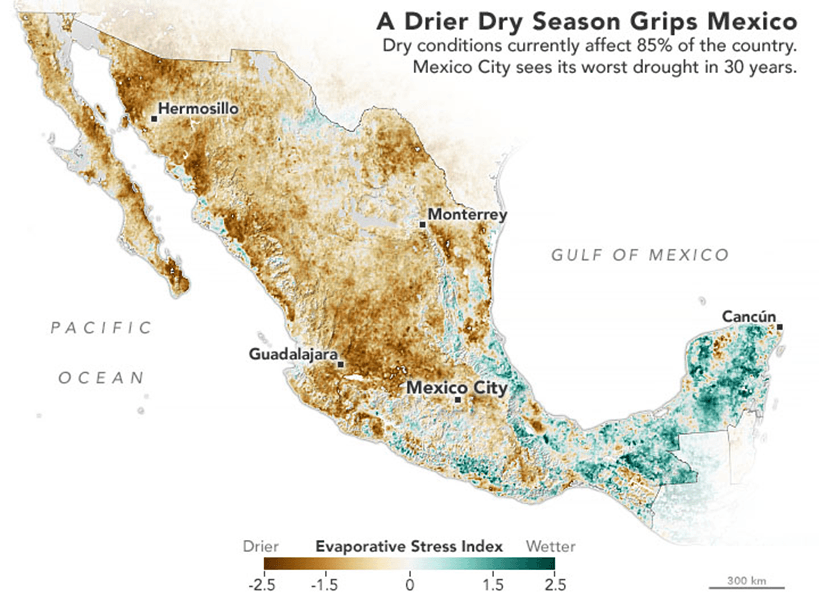
In addition to energy, access to an adequate water supply is vital for industries. Mexico's susceptibility to prolonged droughts in some regions can influence investment decisions, making water infrastructure development crucial.
Regulatory Clarity and Support for Renewables
The success of nearshoring also depends on regulatory clarity and support for renewable energy sources. Mexico must promote the generation of clean and renewable energy through effective public policies. Encouraging the private sector to invest in renewable energy infrastructure is essential to meet increasing demand and sustainability goals.
Collaboration with the Private Sector
Mexico's energy challenges are partly attributed to inadequate planning. To seize the nearshoring opportunity, there's a call for greater collaboration between the government and the private sector. Allowing the private sector to play a more significant role in energy infrastructure planning can help identify critical investment areas.
Embracing Renewable Energy
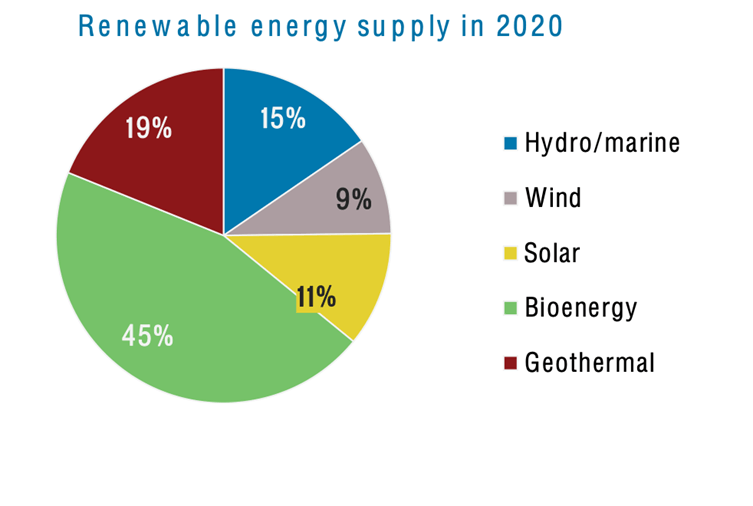
Mexico's transition to clean and renewable energy is essential to meet decarbonization and sustainability objectives. The country has substantial untapped renewable energy potential, but investment and development are needed to fully utilize these resources. Mexico's commitment to clean energy, as outlined in international agreements, underscores the importance of this transition.
Security
Organized crime remains a significant security threat in Mexico, primarily driven by major drug cartels such as the Sinaloa Cartel, los Zetas, the Gulf Cartel, and others. These cartels have diversified into non-narcotics-related criminal activities, posing a long-term threat to multinational businesses operating in Mexico.
Cartel-related violence, including conflicts between rival cartels, confrontations with government authorities, and diversification into non-narcotics crimes, continues to drive insecurity in Mexico. This violence can directly impact business operations.
Security Concerns for Businesses
Businesses operating in Mexico should be aware of specific security concerns, including extortion, supply chain theft, kidnapping (physical and virtual), human smuggling, resource theft (e.g., petroleum), auto theft, assassination for hire, money laundering, and piracy of products and software.
Corruption and extortion pose significant risks to businesses. Understanding how to counter these threats through proactive measures is essential for safeguarding operations.
Protecting the supply chain is critical, particularly given Mexico's unique cargo theft patterns and vulnerabilities. Businesses need to assess the desirability of their products to thieves and adapt their security measures accordingly.
Implications for Nearshoring
Nearshoring in Mexico presents an ideal opportunity for businesses, but it comes with risks. Understanding and addressing these security challenges is crucial for the success of nearshoring operations. Businesses must consider their vulnerability to theft and violence, as well as develop comprehensive security strategies.
The Mexican government's efforts to combat insecurity have been insufficient. The private sector emphasizes the need for a more effective and comprehensive national security strategy, including police force reform and improved law enforcement.
While nearshoring in Mexico offers economic benefits, it is essential for businesses to acknowledge and address the persistent security threats. Understanding the security landscape, assessing specific risks, and implementing proactive security measures are vital steps in ensuring the safety and success of nearshoring operations. Collaborative efforts between the private sector and the government are also crucial to combating organized crime and creating a more secure environment for businesses.
The success of Mexico's nearshoring industry hinges on its ability to strike a balance between higher wages for its labor force and maintaining cost-effectiveness through automation, infrastructure development, and access to cheap energy. By addressing these challenges, Mexico can secure its position as a top-tier global manufacturing hub for years to come.
Do you need help to overcome those nearshoring challenges?
Are you ready to embrace the advantages of nearshoring in Mexico while mitigating the associated challenges? Contact us today to discover how we can help you find the ideal suppliers, distributors, and logistics centers to make your nearshoring venture a resounding success. Let's unlock the full potential of nearshoring in Mexico together.
Central Interactiva. (2023). Retos y desafíos del nearshoring en el panorama actual de la construcción en México. Retrieved from https://www.expocihachub.com/nota/ingenieria-y-construccion/retos-y-desafios-del-nearshoring-en-mexico#:~:text=Uno%20de%20los%20desafíos%20más,específicas%20puede%20ser%20un%20desafío.
Entrelíneas. (2023). SUMINISTRO DE ENERGÍA, AGUA Y PERSONAL, RETOS EN LOS ESTADOS ANTE NEARSHORING.Retrieved from https://entrelineas.com.mx/mexico/suministro-de-energia-agua-y-personal-retos-en-los-estados-ante-nearshoring/
Escobar, S. (2023). E-commerce impulsa ocupación de espacios logísticos, pero no hay infraestructura suficiente para atender la demanda.Retrieved from https://www.eleconomista.com.mx/econohabitat/E-commerce-impulsa-ocupacion-de-espacios-logisticos-pero-no-hay-infraestructura-suficiente-para-atender-la-demanda-20230526-0003.html
Espejo, S. (2023). Nearshoring an opportunity for Mexico, but energy to power it could be a challenge. Retrieved from https://www.spglobal.com/commodityinsights/en/market-insights/latest-news/electric-power/081723-nearshoring-an-opportunity-for-mexico-but-energy-to-power-it-could-be-a-challenge?_its=JTdCJTIydmlkJTIyJTNBJTIyMTEwOGQ0YWYtNzNkYy00MmJkLTlhYTYtYzE5ZTZjYWVjNDI4
Estrella, V. (2023). Déficit industrial y de mano de obra, entre los retos de los estados ante el nearshoring.Retrieved from https://www.eleconomista.com.mx/estados/Deficit-industrial-y-de-mano-de-obra-entre-los-retos-de-los-estados-ante-el-nearshoring-20230718-0066.html
Forbes. (2023). Los retos de la sociedad ante el nearshoring.Retrieved from https://www.forbes.com.mx/los-retos-de-la-sociedad-ante-el-nearshoring/
Goslin, C. (2023). THE SECURITY RISKS OF NEAR-SHORING TO MEXICO. Retrieved from https://cclshouston.com/blog/36-the-security-risks-of-near-shoring-to-mexico
Greenberger-Bright, J. (2023). What Moving China Production to Mexico Means for Energy Sector. Retrieved from Mexico Business News: https://mexicobusiness.news/energy/news/what-moving-china-production-mexico-means-energy-sector
Noguez, R. (2023). México necesita sí o sí energías renovables para captar inversiones del nearshoring: Moody’s.Retrieved fromhttps://www.forbes.com.mx/mexico-necesita-si-o-si-energias-renovables-para-captar-inversiones-del-nearshoring-moodys/
Porras, E. (2023). Tres retos para materializar la oportunidad del nearshoring en México.Retrieved from EGADE IDEAS: https://egade.tec.mx/es/egade-ideas/opinion/tres-retos-para-materializar-la-oportunidad-del-nearshoring-en-mexico
PROLOGIS. (2023). IMPACTS OF NEARSHORING ON DEMAND FOR MEXICAN LOGISTICS REAL ESTATE. Retrieved from https://www.prologis.com/news-research/global-insights/impacts-nearshoring-demand-mexican-logistics-real-estate?utm_source=organic_social&utm_medium=linkedin&utm_campaign=research