
Choosing the Right Location: Data Center Site Selection in Mexico
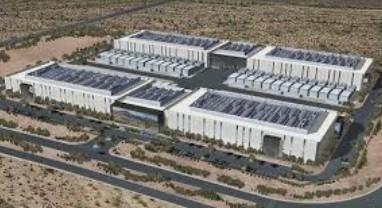
Selecting an optimal site for a data center in Mexico is one of the most critical strategic decisions operators must make. Location determines energy costs, latency, reliability, risk, scalability, and regulatory ease. In a growing market, understanding the pros and cons of different Mexican regions is essential. This post explores the key factors and regional hotspots shaping data center location strategy in Mexico.
Key Criteria for Data Center Site Selection in Mexico
When evaluating a prospective location for a Mexican data center, operators typically weigh several core factors. Below is a breakdown of the most important ones:
| Factor | Why It Matters | Ideal Conditions |
|---|---|---|
| Power availability & reliability | Energy is the largest OPEX; outages or instability undermine operations | Proximity to high-capacity grid nodes, redundant feeds, good utility reputation |
| Connectivity & fiber infrastructure | Latency and network redundancy are critical | Dense fiber routes, carrier‑neutral exchanges, multiple backbone paths |
| Land & scalability | Must accommodate growth | Parcels outside dense urban zones, favorable zoning, room for expansion |
| Risk & natural hazards | Earthquakes, floods, storms affect uptime | Low-risk zones, good drainage, seismic design codes |
| Proximity to markets / clients | Reduces latency & transport | Cities or industrial hubs, or near cross-border corridors |
| Regulation & incentives | Tax breaks, permitting speed, power tariffs | Favorable local government, clean energy policies, data center‑friendly laws |
| Water and cooling environment | Efficient cooling reduces cost | Cooler climates, lower humidity, access to water for evaporative designs |
In practice, few locations score perfectly on all these criteria — the art is finding the best balance for your business model.
Regional Hotspots in Mexico for Data Centers
Querétaro & the Bajío Corridor
Querétaro is widely considered Mexico’s premier data center hub. It benefits from:
Multiple fiber routes and strong connectivity to Mexico City and beyond
Relatively stable power infrastructure and substation capacity
Lower seismic and flood risk zones compared to coastal or southern states
Room for campus-style expansion in industrial parks
Proximity to manufacturing hubs and population centers
ODATA’s QR03 campus, for example, is in the PyME Industrial Park in Querétaro, and will deliver up to 300 MW of IT load across multiple buildings.Much of Mexico’s active data center capacity is concentrated in Querétaro and its environs — over 50% of the ~350,000 m² of existing or under-construction space is in this region.Digital Realty describes its Querétaro facilities as located in “zones safe from seismic and flood risk, with dedicated substations.”
Guanajuato / Bajío
Adjacent to Querétaro, Guanajuato offers some advantages:
Close enough to leverage the fiber network and regional interconnects
Projects like Layer 9’s 96 MW campus show interest in developing in that state.
Less congested land, slightly lower cost base
Mexico City Metropolitan Area
The capital region has major advantages:
Highest concentration of enterprises, networks, financial institutions
Strong interconnection potential — e.g. Equinix’s MX1/MX2 data centers in CDMX.
But faces challenges: high real estate costs, dense urban constraints, risk of power stress
Guadalajara & Jalisco
Guadalajara has a thriving tech and electronics ecosystem (often called Mexico’s “Silicon Valley”)HostDime operates a Tier III data center in Guadalajara, with carrier‑neutral connectivity and good fiber coverage.This region is appealing for serving western Mexico, parts of PAC, and for redundancy paths around central hubs.
Monterrey / Nuevo León
Monterrey offers strong industrial synergy, proximity to U.S. border, and existing infrastructure.It is already hosting multiple data center facilities as a northern node in Mexico’s data center map.
Tradeoffs & Challenges in Site Choice
While hotspots draw most attention, operators must avoid pitfalls:
Grid congestion & capacity limits: Even Querétaro and Bajío are beginning to feel strain as more projects demand power.
Transmission distance: Remote sites may require long transmission lines, increasing cost and risk.
Regulatory complexity: Local permitting, land use, environmental rules vary significantly by state and municipality.
Energy cost volatility: Power tariffs can differ regionally, as can constraints on renewable sourcing.
Water scarcity & cooling constraints: Regions with limited water availability require alternative cooling approaches.
Seismic & climate risk: Coastal or southern states may face higher hurricane, flood, or seismic risk.
Conclusion
Choosing a location for a data center in Mexico is far more than real estate selection — it’s a strategic bet on energy, connectivity, risk, cost, and regulatory environment. Querétaro and the Bajío have established themselves as leading candidates, but opportunities exist in peripheral markets for operators willing to manage tradeoffs.
If you get the selection right, it becomes the foundation for sustainable scaling, competitive latency, reliable operations, and long-term return on technology infrastructure investment.