
CloudHQ’s $4.8B Bet Rewrites Mexico’s Data Center Landscape
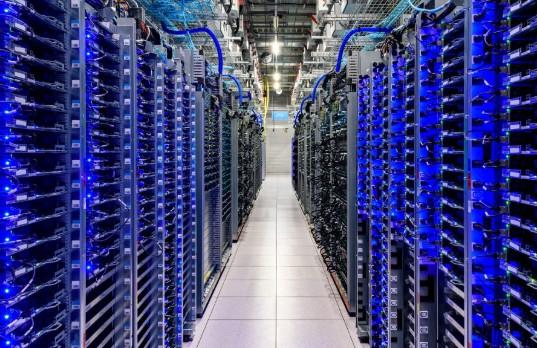
Mexico is now emerging as a central stage for data center expansion, especially with the recent decision by CloudHQ to pour USD 4.8 billion into a hyperscale campus in Querétaro. This development signals a new chapter in data center investment in Mexico, providing momentum for AI, cloud computing, and digital infrastructure growth.
In this article, we explore the implications of this landmark investment, the evolving data center market in Mexico, and how this ties into broader nearshoring and sustainability trends.
The CloudHQ Project: Scale, Ambition, and Impact
At its core, CloudHQ’s plan involves constructing six data center buildings on a 52-hectare campus in Querétaro, with a critical IT load capacity projected at up to 900 MW. Each building is expected to house about 60 MW of IT capacity. The first tranche of 200 MW has already been secured under lease agreements.
Construction is expected to be completed around 2027, generating 7,200 construction jobs and approximately 900 permanent roles in operations. A private substation of 900 MW and a switching substation of 2 GW will support the project’s energy needs. Importantly, the campus will employ waterless cooling systems, aligning with environmental and water conservation priorities.
This bold investment is not just a showpiece — it reflects the confidence that global tech firms place in Mexico’s role in the digital economy.
Mexico’s Data Center Market: Fast-Growing, But With Challenges
The Mexico data center market, encompassing colocation, wholesale, and hyperscale facilities, is growing rapidly. In 2024, the market was estimated at about USD 1.06 billion, and forecasts project it to reach USD 2.27 billion by 2030, with a CAGR of approximately 13.5%.
Meanwhile, the colocation segment is expected to surge with a projected CAGR of 21.3% through 2030. This indicates escalating demand for shared data center space from cloud, enterprise, telecom, and AI operators.
Querétaro is emerging as the epicenter of this growth, thanks to optimal connectivity, central geography, and an investor-friendly environment. Also, Equinix’s MX2 facility, and expansions by Ascenty, ODATA, and KIO Networks, further affirm Mexico’s role as a data center hub.
However, growth brings challenges: energy reliability, grid transmission capacity, and water availability will test whether expansion is sustainable.
Aligning with Nearshoring & Digital Strategy
The timing of the CloudHQ announcement aligns intimately with Mexico’s nearshoring ambitions. As companies relocate supply chains closer to the U.S., they demand local digital infrastructure — cloud regions, low latency, data sovereignty — that robust data centers can provide.
With AI and large-scale compute workloads becoming key drivers of demand, data centers are now foundational to industrial and cloud ecosystems. Mexico is carving out that role, and CloudHQ’s project offers a signal to other global tech firms.
Sustainability & Technical Trade-Offs
CloudHQ’s decision to adopt waterless cooling systems is notable. In water‑stressed regions like Querétaro, reducing water demand is critical. That said, the power draw from such large-scale infrastructure must be met with stable grid supply, renewable integration, and efficient design.
Moreover, the regulatory environment must support efficient permitting, transmission upgrades, and incentives that ease the path for new data center developments.
Conclusion
CloudHQ’s USD 4.8 billion investment in data centers in Querétaro marks a watershed moment for the Mexican data center industry. It underscores global confidence in Mexico’s role within the digital economy and nearshoring ecosystem.
As the data center market in Mexico escalates — supported by demand, colocation growth, and hyperscale projects — the key to sustained success will lie in balancing infrastructure, regulation, technical innovation, and environmental sustainability.