Industrial Real Estate in Mexico: Why Nearshoring Is Converting into Physical Demand
Executive Introduction: Why This Topic Matters Now
Nearshoring has moved beyond strategic intent and into execution mode. For companies restructuring supply chains in North America, the critical question is no longer whether Mexico benefits from nearshoring, but how and where this demand translates into industrial real estate decisions.
Based on the latest available data (2024–2025), Mexico combines manufacturing depth, qualified labor, and trade integration at a scale unmatched in the region. During recent high-level meetings, representatives of the World Economic Forum highlighted Mexico’s ability to absorb investment not just politically, but operationally — through factories, logistics platforms, and industrial parks.
For CEOs, COOs, and heads of operations, this raises a concrete question:What does nearshoring actually mean for industrial buildings in Mexico, and how reliable is the current demand outlook?
Mexico’s Position in Nearshoring: From Narrative to Numbers
According to Marisol Argueta, Director for Latin America and Executive Committee member at the World Economic Forum, Mexico has evolved into “a manufacturing hub with consolidated capabilities, a qualified workforce, and strong entrepreneurial momentum.”
This positioning is not theoretical. It is supported by measurable indicators:
- Manufacturing accounts for ~20% of Mexico’s GDP (latest available data, 2024).
- Mexico ranks among the top manufacturing exporters globally, with deep integration into U.S. supply chains.
- More than 80% of Mexico’s exports are destined for North America, reinforcing proximity-driven production logic.
For industrial real estate, these macro indicators matter only insofar as they convert into physical space demand — factories, warehouses, and production-ready sites.
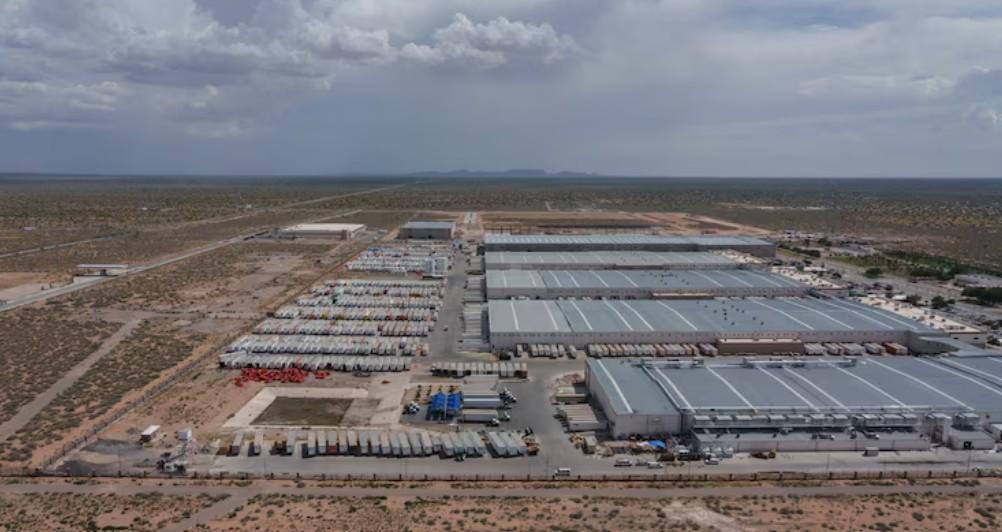
Industrial Parks in Mexico: Current Market Structure
As of 2025, Mexico hosts approximately:
- 477 operational industrial parks
- 4,000+ tenant companies
- More than 3.7 million jobs generated within industrial parks
(Data source: AMPIP, latest available figures 2024–2025)
Tenant composition shows why industrial parks are central to nearshoring execution:
- Manufacturing: ~36%
- Automotive: ~32%
- Logistics & distribution: ~19%
- E-commerce: ~8%
Geographically:
- ~54% of industrial parks are located in border states
- ~24% in the Bajío–Occidente region
- ~22% in Central Mexico / Mexico City metro area
This distribution reflects different site selection logics: border proximity, labor optimization, and domestic consumption.
The Investment Pipeline: Signal, Not Commitment
During recent briefings related to Plan México, President Claudia Sheinbaum referenced an investment pipeline of approximately USD 298 billion in announced and exploratory projects.
It is critical to interpret this number correctly.
- The USD 298bn figure does not represent committed FDI
- It reflects projects under evaluation, discussion, or early planning stages
- Not all projects will materialize
However, from an industrial real estate perspective, this pipeline is a leading indicator. Even partial realization implies future demand for industrial land, power capacity, and industrial buildings in Mexico.
For site selection teams, such pipelines signal where capacity constraints may emerge — particularly in regions already operating near infrastructure limits.
Nearshoring and Industrial Real Estate: The Conversion Mechanism
Nearshoring impacts industrial real estate differently than traditional FDI.
Key characteristics:
Time sensitivityCompanies prioritize speed to market, increasing demand for ready-to-use industrial parks and built-to-suit facilities.
Risk minimizationIndustrial parks reduce exposure to permitting delays, zoning uncertainty, and infrastructure gaps.
Scalability requirementsFirms increasingly seek sites that allow phased expansion without relocation.
As a result, industrial real estate in Mexico has become an operational bottleneck, not a passive asset class.
Absorption, Vacancy, and Market Normalization
After record absorption levels in 2022–2023, the market shows signs of normalization:
- Net absorption in 2024: ~4.6 million m²
- Net absorption 1H 2025: ~1.5 million m²
- Vacancy rate increased from ~3.7% to ~4.9% in early 2025
These figures do not indicate a downturn. Instead, they reflect:
- Decision delays due to trade uncertainty
- More selective site selection
- A shift from speculative expansion to execution discipline
For decision-makers, this creates better entry conditions, including more stable rental levels and increased availability in selected markets.
Labor Availability as a Site Selection Variable
Industrial real estate decisions in Mexico are inseparable from labor considerations.
Mexico offers:
- Lower blue-collar turnover rates than the U.S.
- A growing base of technically trained workers
- Strong clusters around Monterrey, Querétaro, Guanajuato, and Tijuana
Industrial parks near technical universities and established manufacturing clusters show higher occupancy resilience and lower execution risk.
This explains why nearshoring demand concentrates in specific industrial zones, not evenly across the country.
Infrastructure Constraints: Power, Water, Permitting
Despite strong demand fundamentals, constraints remain:
- Existing industrial parks require ~13,200 MW of installed power capacity
- Parks under construction will require an additional ~2,400 MW
- Developers face up to 30+ permits across federal, state, and municipal levels
- Some infrastructure permits legally capped at 2 months take 12–24 months in practice
These factors directly influence which industrial buildings in Mexico are viable for nearshoring projects.
What This Means for Site Selection Decisions
For executives evaluating warehouses and industrial buildings in Mexico, three decision rules emerge:
Execution readiness outweighs headline incentivesFully serviced industrial parks outperform cheaper but undeveloped land.
Location quality beats national averagesLabor depth, grid access, and logistics connectivity are decisive.
Optionality reduces strategic riskSites that allow expansion without relocation retain long-term value.
Industrial real estate is no longer a downstream decision — it is a core element of supply chain strategy.
Outlook: Structural Demand, Selective Growth
Based on current conditions (2024–2025):
- Nearshoring remains a structural driver, not a short-term cycle
- Industrial real estate growth will be more selective, not weaker
- Regions with infrastructure readiness will continue to attract demand
Mexico’s challenge is not attracting interest, but executing capacity fast enough to meet it.
Decision Takeaway
Mexico’s nearshoring advantage becomes real only when it is anchored in industrial real estate.
Industrial parks are execution platforms
Industrial buildings are strategic assets
Site selection errors carry multi-year cost implications
Companies that align nearshoring strategy with real estate reality are better positioned to convert intent into operational performance.
FAQ – Questions Executives Ask
Is industrial real estate in Mexico still growing in 2025?Yes, but growth is more selective and execution-driven.
What does the USD 298bn investment pipeline mean in practice?It signals future demand potential, not guaranteed projects.
Are industrial parks in Mexico still absorbing demand?Yes, particularly in established clusters with infrastructure readiness.
Is nearshoring still a valid strategy for Mexico?Yes, especially for North American-oriented supply chains.
What is the biggest risk in site selection?Underestimating infrastructure constraints and permitting timelines.