
The Future of Automotive Manufacturing in Mexico
History of Auto Manufacturing
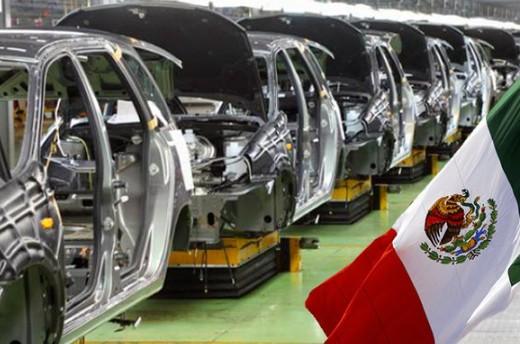
The story of automotive manufacturing in Mexico dates back to the 1960s, when major U.S. automakers began to establish operations south of the border to serve the growing Latin American market. Over the years, Mexico’s role evolved from assembly-focused maquiladoras to fully integrated manufacturing hubs producing vehicles and components for global export.
Today, the auto industry in Mexico ranks as one of the top 10 automotive producers worldwide, generating over 3 million vehicles annually and employing hundreds of thousands of workers. Key players like General Motors, Ford, Volkswagen, and Nissan have expanded their footprint, solidifying Mexico’s importance to the North American automotive supply chain.
New Investment Trends
Recent years have seen a surge in foreign direct investment (FDI) aimed at expanding automotive manufacturing in Mexico. OEMs and Tier 1 suppliers are investing in production lines, tooling, and logistics infrastructure to support rising demand and tighter lead times in North America.
In 2023 alone, Mexico attracted over $5 billion in new automotive investments. Companies like BMW and Tesla have announced or expanded manufacturing facilities, signaling a new chapter for the auto industry in Mexico. The country’s well-trained workforce, strong supplier base, and proximity to the U.S. continue to attract global capital.
EV and Battery Production
Perhaps the most transformative trend shaping the auto industry in Mexico is the transition to electric vehicles. EV-related manufacturing in Mexico is accelerating rapidly, with new plants dedicated to battery assembly, electric drivetrains, and lightweight vehicle structures.
General Motors, for example, has converted its Ramos Arizpe plant to produce EVs, while Chinese automaker BYD is scouting locations for its first North American EV factory. The country’s renewable energy potential and skilled labor make it a viable contender in the global EV production Mexico landscape.
Moreover, Mexico’s central location and USMCA trade benefits make it an ideal export base for EVs destined for the U.S. and Canada. As U.S. EV adoption grows, having manufacturing capacity within the trade zone is a strategic advantage.
Skilled Workforce in Automotive Sector
One of the key strengths behind successful automotive manufacturing in Mexico is its technical workforce. With hundreds of engineering universities and technical institutes, the country produces thousands of graduates specialized in automotive design, mechatronics, and quality assurance.
Partnerships between industry and academia ensure that training is aligned with real-world production needs. For instance, states like Guanajuato and Nuevo León have developed automotive clusters with direct pipelines from local universities into OEMs and suppliers.
This growing talent pool helps position the auto industry in Mexico as innovative, adaptable, and capable of supporting high-precision, next-generation vehicle technologies—including autonomous and connected systems.
Final Thoughts
The future of automotive manufacturing in Mexico is electrified, digitized, and export-oriented. As the global auto sector shifts toward sustainability, connectivity, and automation, Mexico is rising as a key production and innovation hub.
Backed by decades of experience, a skilled workforce, and modern industrial infrastructure, the auto industry in Mexico is set to lead the charge into a new era. And with booming EV production in Mexico, the country is no longer just an assembly site—it’s becoming a driver of the automotive industry's future.