From Efficiency to Resilience: How Tariffs and Geopolitics Are Reshaping Global Supply Chains — and Why Mexico Is Emerging as a Key Hub

Introduction
For decades, global supply chains were designed around one primary objective: efficiency. Companies optimized production for the lowest possible cost, often relying on complex international networks that stretched across continents.
Today, that model is undergoing a profound transformation.
Rising geopolitical tensions, new industrial policies, and increasing trade restrictions are forcing companies to rethink their global manufacturing strategies. Supply chains are shifting from a purely efficiency-driven model to one focused on resilience, security, and regionalization.
This transformation is not happening overnight. But the evidence is clear: the structure of global value chains is evolving, and Mexico is increasingly emerging as one of the key beneficiaries of this shift.
According to recent economic research on global value chains, the world is not experiencing de-globalization, but rather a reorganization of trade flows and production networks.
Global_Value_Chains_GVC_from_ef…
A Decade of Global Shocks Reshaping Supply Chains
Global supply chains have been exposed to multiple shocks over the past two decades. These events have forced companies to reconsider the risks associated with long and fragile supply chains.
Figure 1 – Major Global Shocks Affecting Supply Chains
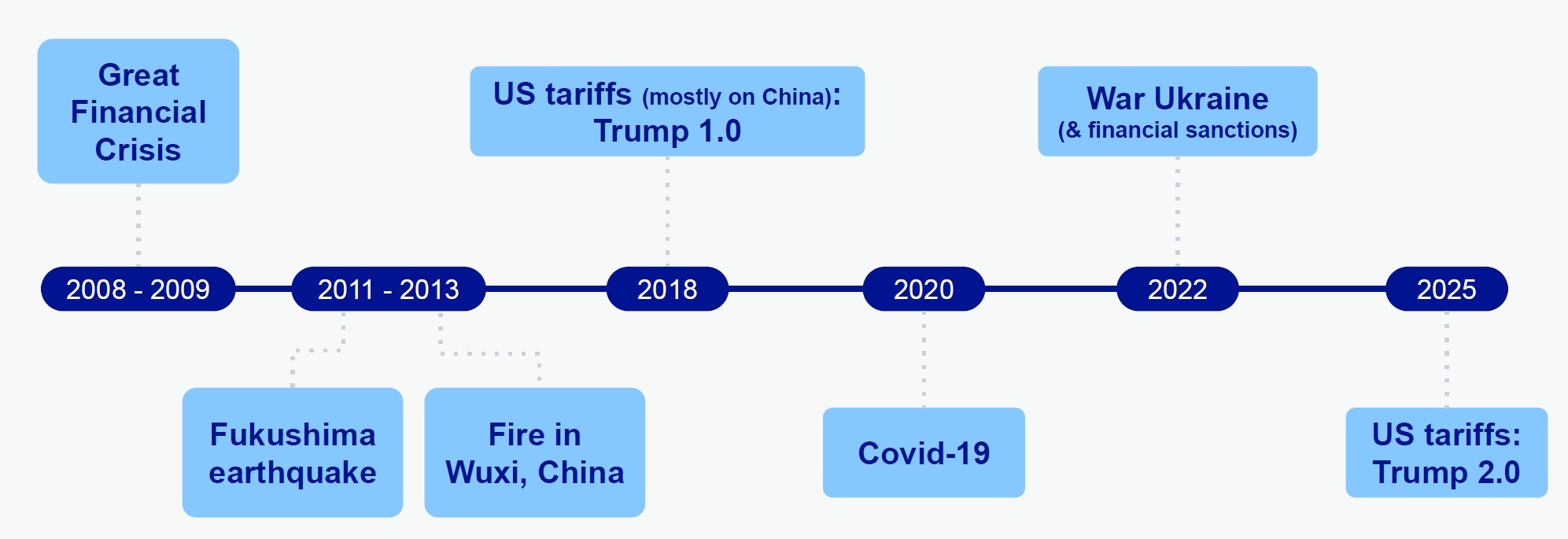
The timeline highlights several major events that have shaped global supply chains:
- The 2008–2009 global financial crisis
- The Fukushima earthquake disrupting semiconductor and electronics supply
- Trade tensions and tariffs during the Trump administration
- The COVID-19 pandemic, which exposed the fragility of long supply chains
- The war in Ukraine and global sanctions
- The recent rise of new tariff policies in 2025
These disruptions have accelerated a strategic shift among multinational companies. Instead of focusing solely on low production costs, companies are increasingly prioritizing supply chain resilience and geographic diversification.
This structural change explains the rapid growth of nearshoring and regional production networks, particularly in North America.
Tariffs and Geopolitics Are Driving a Supply Chain Reorganization
Trade policy has become one of the most important drivers of supply chain restructuring. Tariffs imposed on key economies—especially China—have significantly changed global trade flows.
Figure 2 – US Effective Tariffs on Major Trading Partners
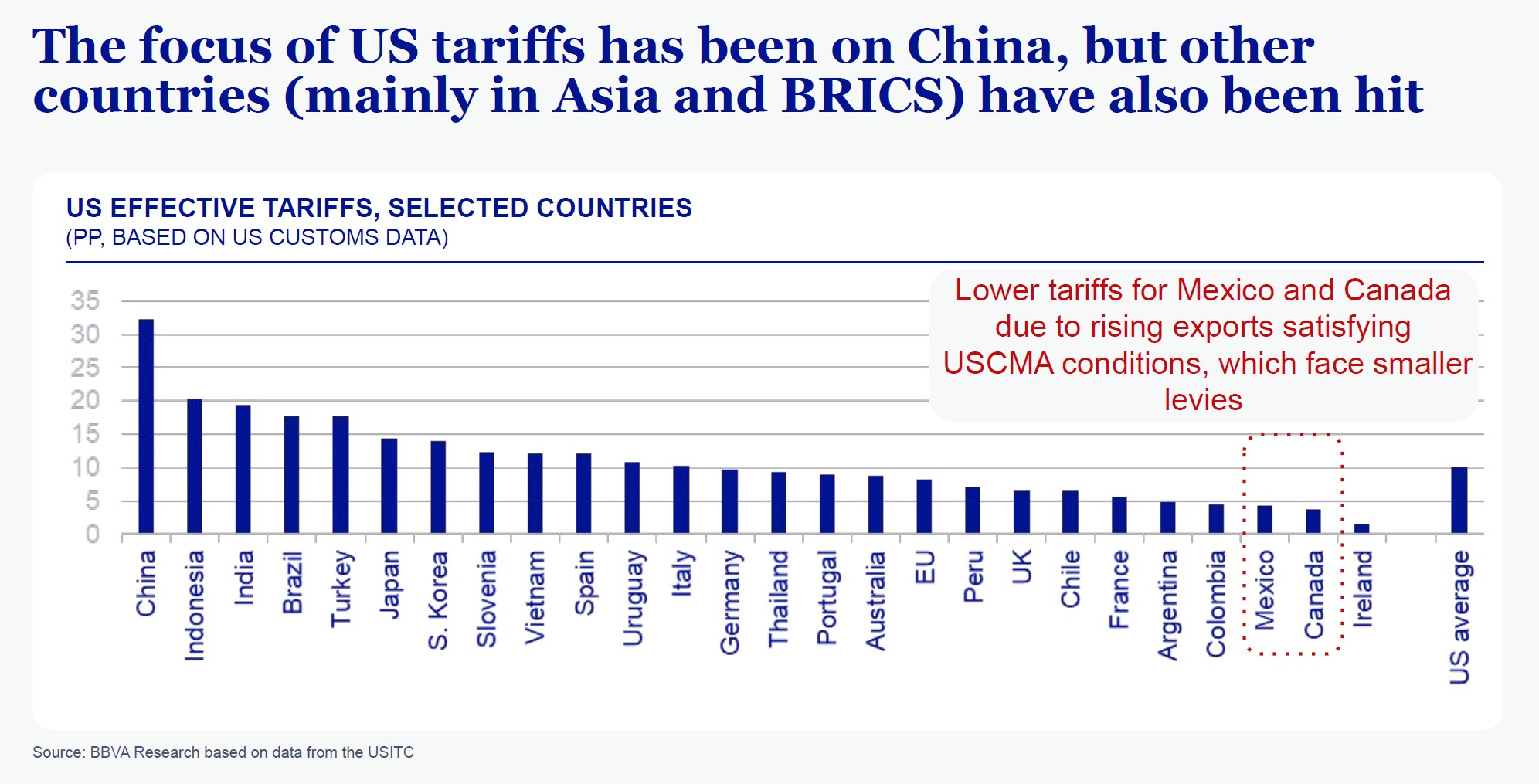
The chart illustrates that China faces the highest effective tariffs in the U.S. market, while countries such as Mexico and Canada face significantly lower tariffs thanks to the USMCA trade agreement.
In fact, exports from Mexico and Canada benefit from preferential tariff treatment when they comply with USMCA rules of origin.
This advantage has made Mexico increasingly attractive as a manufacturing base for companies serving the U.S. market.
Countries Facing Higher Tariffs Are Losing Market Share
Trade restrictions have also had a measurable impact on import patterns in the United States.
Figure 3 – Changes in US Import Share and Tariffs
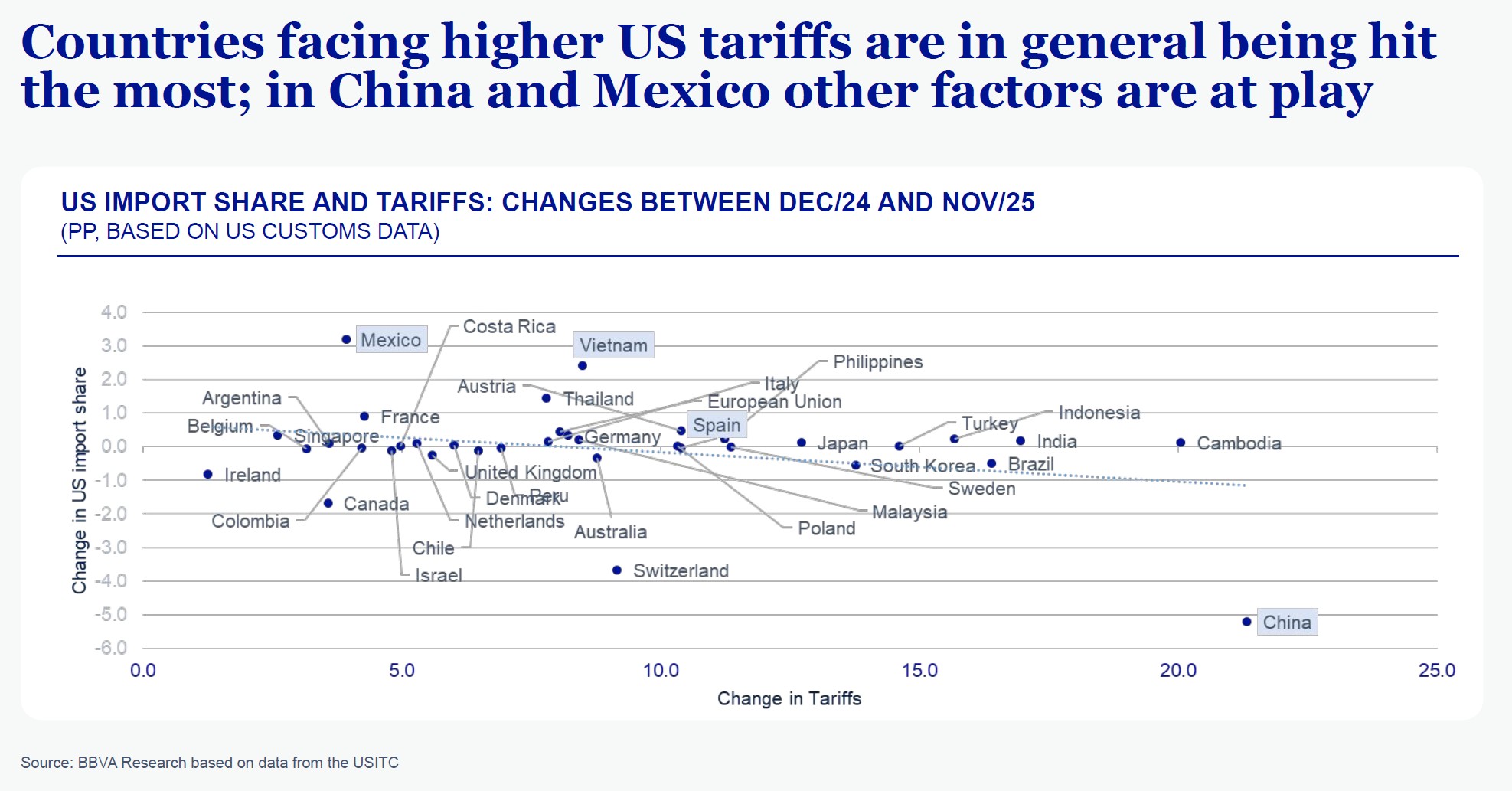
The relationship is clear: countries facing higher tariffs are generally losing import market share.
However, there are important exceptions.
China’s exports to the U.S. have declined significantly, but global supply chains have adapted rather than collapsed. Instead of disappearing, trade flows are being re-routed through alternative production hubs.
Mexico is one of the countries benefiting from this shift.
Mexico and the Rise of “Connector Countries”
One of the most interesting developments in global trade is the emergence of so-called connector economies.
Figure 4 – US Imports by Country of Origin
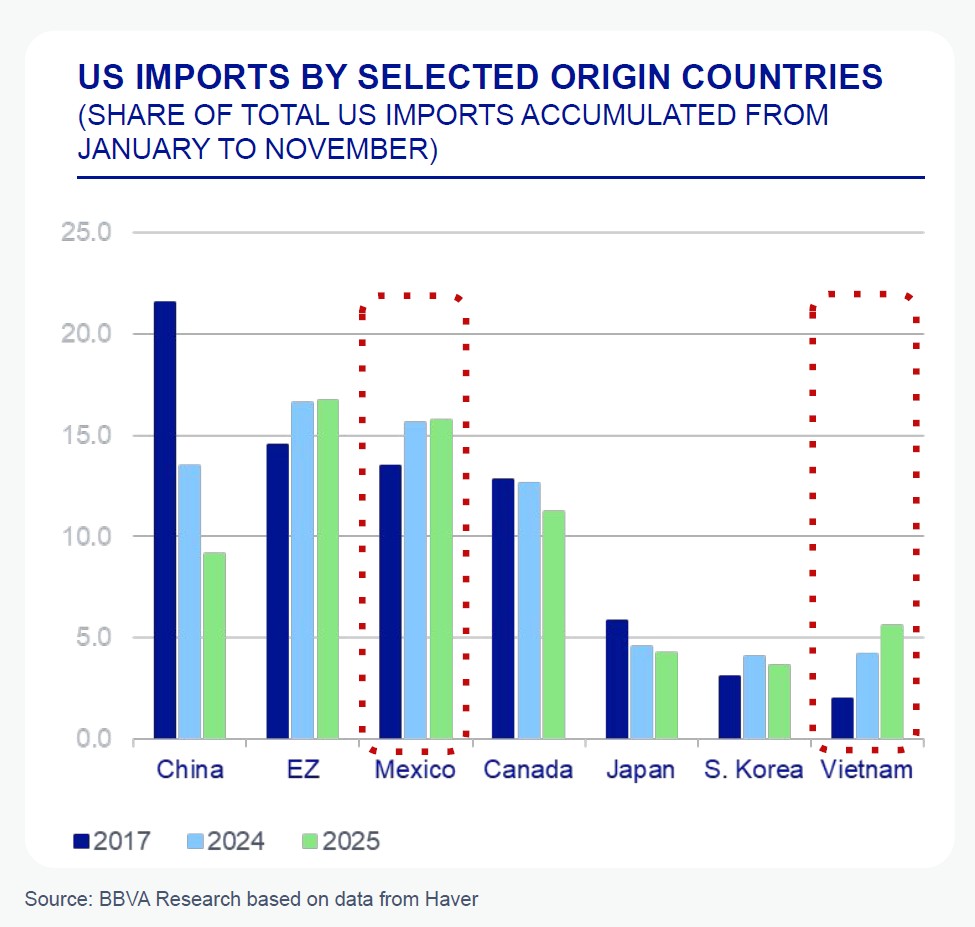
The chart shows a clear trend: the share of U.S. imports coming from China has declined, while imports from countries such as Mexico and Vietnam have increased.
These economies are increasingly acting as intermediaries in global value chains, importing components from Asia and exporting finished goods to North America.
Research shows that countries like Mexico, Vietnam, and the Philippines are becoming key connectors between global production networks.
Global_Value_Chains_GVC_from_ef…
For companies, this trend is highly relevant. It means production networks are shifting closer to major consumer markets.
Global Trade Remains Strong Despite Supply Chain Reorganization
Despite geopolitical tensions and tariffs, global trade volumes continue to grow.
Figure 5 – Global Exports of Goods (Volume)
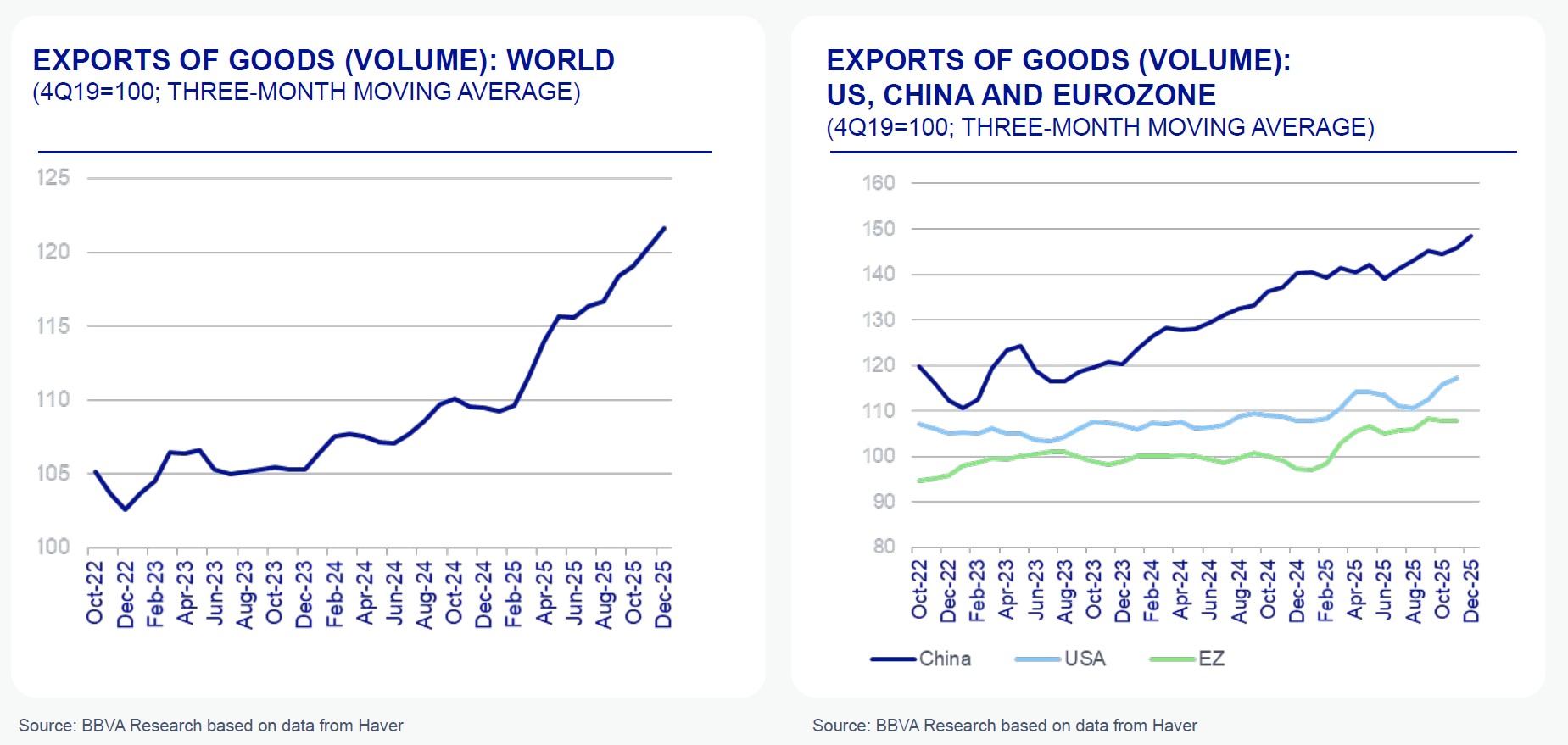
The chart shows that global export volumes have steadily increased in recent years. Even after the pandemic disruptions, international trade continues to expand.
Figure 6 – Export Growth: China, USA and Eurozone
The comparison illustrates that China remains a major export powerhouse, while the United States and Europe continue to experience moderate but steady growth.
The key takeaway is that global trade is not collapsing. Instead, it is reconfiguring geographically.
Control of Critical Raw Materials Is Becoming Strategic
Another major factor reshaping supply chains is the growing importance of critical raw materials.
Figure 7 – Global Supply of Critical Raw Materials
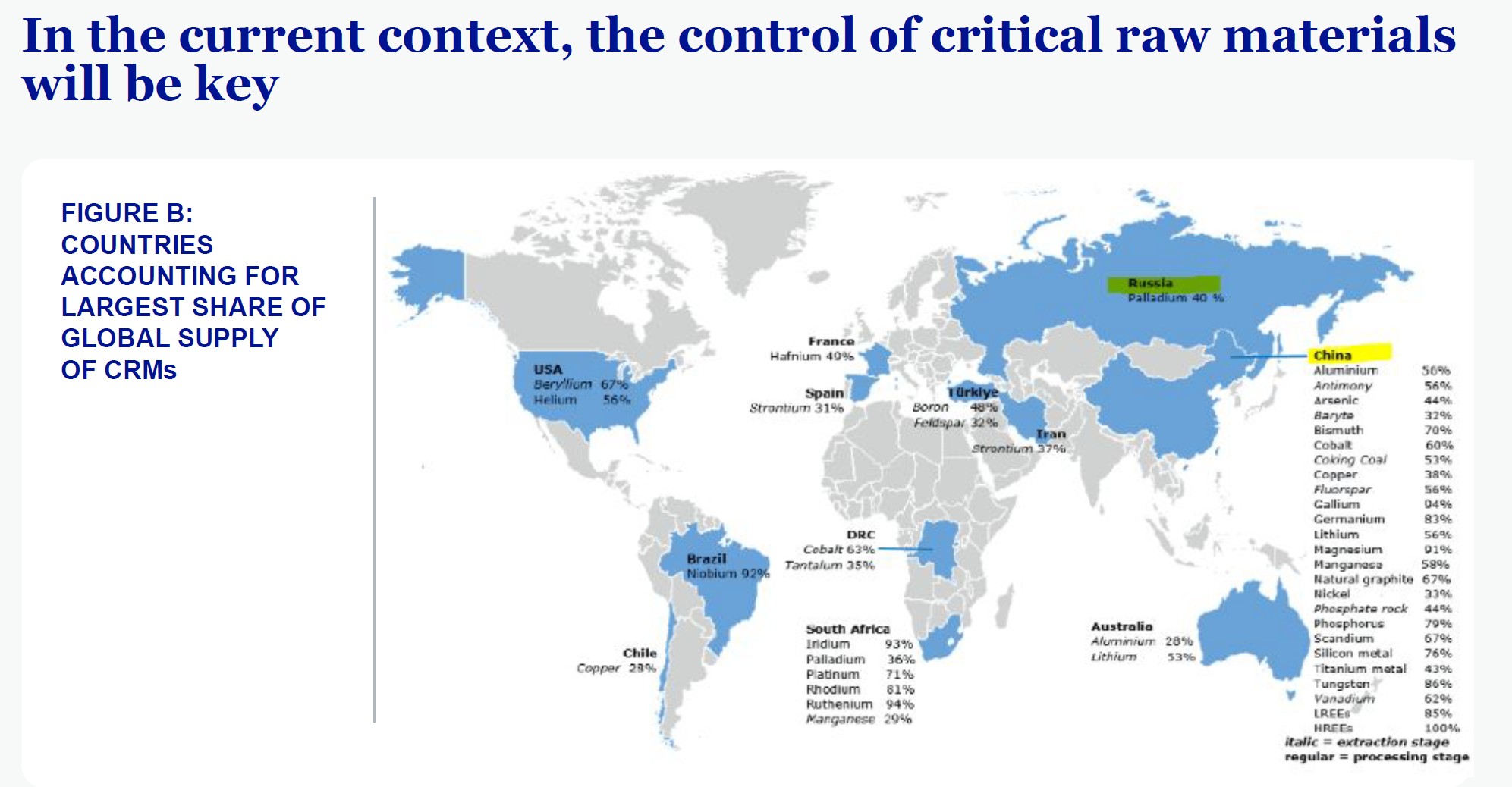
The map shows how certain countries dominate the production of key industrial inputs such as lithium, cobalt, and rare earth elements.
China, for example, controls a large share of global supply chains for critical minerals used in:
- electronics
- renewable energy technologies
- electric vehicles
- advanced manufacturing
This concentration creates strategic vulnerabilities for Western economies and reinforces the need for supply chain diversification.
Mexico’s Investment Boom
One of the strongest signals of Mexico’s growing importance in global supply chains is the increase in foreign direct investment.
Figure 8 – FDI in Mexico by State
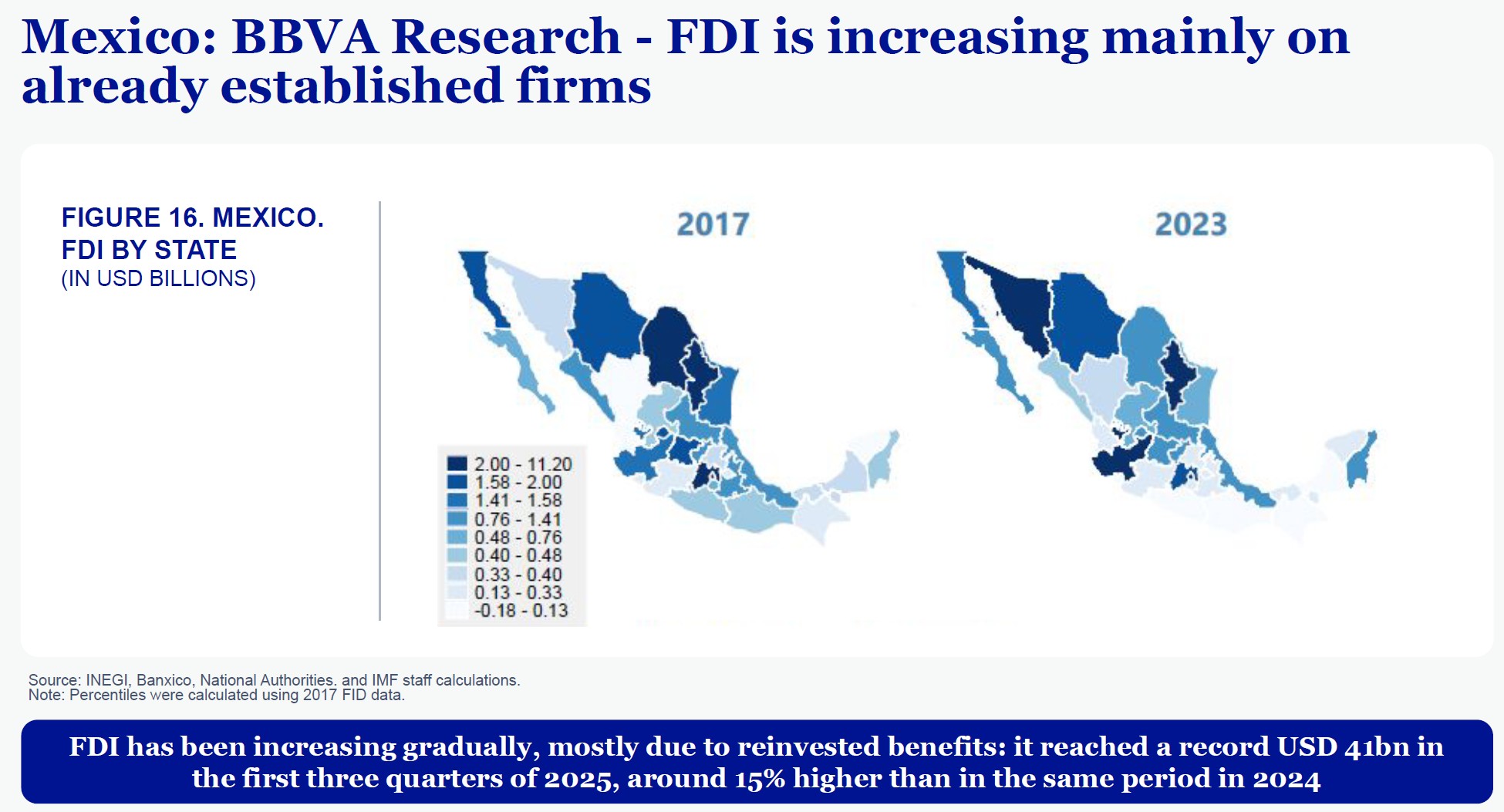
Foreign direct investment in Mexico has been increasing steadily, reaching approximately USD 41 billion in the first three quarters of 2025, about 15% higher than the same period in 2024.
Global_Value_Chains_GVC_from_ef…
Interestingly, much of this investment is coming from companies already operating in Mexico, which are expanding their existing facilities.
This suggests a strong vote of confidence from international manufacturers already embedded in the country’s industrial ecosystem.
The Future of Global Supply Chains
Global value chains are not disappearing. Instead, they are evolving.
Economic research shows several key trends:
- Globalization is being rewired rather than reversed
- Supply chains are becoming more regional
- Production networks are becoming more complex and diversified
- Companies are prioritizing resilience alongside efficiency
- Mexico is uniquely positioned within this transformation.
Its geographic proximity to the United States, extensive manufacturing base, and participation in USMCA make it one of the most attractive destinations for companies seeking to strengthen their North American supply chains.
Conclusion: Mexico Is Emerging as a Strategic Manufacturing Hub
The global economy is entering a new phase of industrial organization.
Instead of global supply chains optimized solely for cost, companies are building regional supply networks designed for resilience and security.
Mexico is increasingly positioned at the center of this transformation.
For manufacturers looking to serve the North American market, the country offers a powerful combination of advantages:
- proximity to the United States
- competitive manufacturing costs
- a mature industrial ecosystem
- access to preferential trade agreements
As global supply chains continue to reorganize, Mexico is likely to play an even more important role in the coming decade.
For companies evaluating their production strategy, the question is no longer whether supply chains will change — but where the next manufacturing hubs will emerge.
Mexico is clearly one of them.
Frequently Asked Questions (FAQ)
Why are global supply chains shifting away from Asia?
Global supply chains are not disappearing, but they are being reorganized. Rising geopolitical tensions, new tariffs, and disruptions such as the COVID-19 pandemic have exposed the risks of long-distance production networks. As a result, companies are increasingly relocating production closer to major consumer markets in order to reduce transportation risks, improve supply chain resilience, and shorten delivery times.
What role do tariffs play in supply chain decisions?
Tariffs directly affect the cost of importing goods. When tariffs increase, companies often relocate production to countries that benefit from preferential trade agreements. In North America, the USMCA trade agreement allows manufacturers producing in Mexico to export many products to the United States with reduced or zero tariffs, making Mexico a highly attractive production location.
Why is Mexico benefiting from nearshoring?
Mexico offers several advantages that make it ideal for nearshoring strategies:
- geographic proximity to the United States
- access to the USMCA free trade agreement
- a large and experienced manufacturing workforce
- strong industrial clusters in automotive, aerospace, electronics, and medical devices
- well-developed logistics infrastructure
These factors allow companies to serve the North American market more efficiently than from distant production hubs.
Is globalization ending?
No. Research suggests that globalization is not ending but evolving. Instead of global supply chains optimized purely for cost, companies are building more regional supply networks that prioritize resilience and security. This process is often referred to as nearshoring or friend-shoring.
Which industries are relocating production to Mexico?
Several manufacturing sectors are expanding rapidly in Mexico due to nearshoring trends, including:
- automotive manufacturing
- aerospace manufacturing
- electronics and semiconductors
- medical device manufacturing
- consumer goods production
These industries benefit from Mexico’s strong supplier networks and proximity to the U.S. market.
How is foreign investment developing in Mexico?
Foreign direct investment in Mexico has grown significantly in recent years. Investment reached approximately USD 41 billion during the first three quarters of 2025, representing a significant increase compared to the previous year. Much of this investment comes from companies expanding existing operations in Mexico, reflecting growing confidence in the country’s industrial ecosystem.
Why is supply chain resilience becoming more important?
Recent geopolitical conflicts, trade disputes, and disruptions in global logistics have highlighted the risks of overly complex supply chains. Companies now prioritize resilience by diversifying suppliers, regionalizing production, and reducing dependence on single-country sourcing strategies.