Industrial Site Selection in Mexico 2026: The New Checklist for Resilient Manufacturing Operations

Executive Summary
Industrial site selection in Mexico has changed fundamentally.
For years, manufacturers selected industrial buildings primarily based on:
- labor costs
- geographic proximity
- and rental prices.
In 2026, those variables alone are no longer sufficient.
Today, companies must evaluate whether a location can sustain operations under:
- energy constraints
- water stress
- logistics disruptions
- ESG requirements
- and increasing operational complexity.
As nearshoring accelerates, industrial site selection in Mexico is becoming less about finding available space and more about securing long-term operational resilience.
For foreign investors entering Mexico, understanding these factors is now essential.
Mexico Continues Expanding as a Global Industrial Platform
Mexico remains one of the world’s most important manufacturing and logistics hubs.
According to AMPIP, the country currently has:
- more than 477 industrial parks
- presence across 28 states
- approximately 85 million square meters of industrial inventory
- and thousands of industrial tenants.
Industrial growth is expected to continue through 2030 as:
- nearshoring investment
- manufacturing diversification
- and North American supply chain integration
continue accelerating.
This growth, however, is creating increasing pressure on:
- infrastructure
- utilities
- logistics corridors
- and industrial land availability.
That is why industrial site selection is becoming increasingly strategic.
The Most Dynamic Industrial Markets in Mexico
The industrial market in Mexico continues concentrating around three major regions:
- Northern Mexico (54.3%)
- Bajío-Occidente (23.7%)
- Mexico City Metropolitan Area (22.1%)
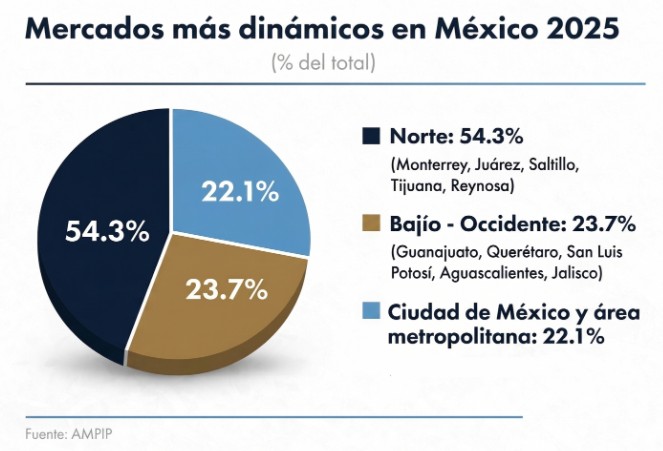
Northern Mexico remains dominant because of:
- proximity to the United States
- automotive and electronics manufacturing
- export infrastructure
- and cross-border logistics integration.
The Bajío region continues attracting:
- automotive suppliers
- aerospace manufacturing
- advanced manufacturing
- and industrial expansion projects.
Meanwhile, central Mexico and the Mexico City metropolitan region remain strategically important due to:
- domestic consumption
- national logistics connectivity
- and distribution infrastructure.
For foreign manufacturers, these regions provide different strategic advantages depending on:
- supply chain requirements
- labor needs
- and customer proximity.
Industrial Site Selection Is No Longer Only About Location
Historically, industrial site selection focused mainly on:
- labor arbitrage
- transportation distance
- and industrial rent.
Today, the key question is different:
Can the location sustain operations over the next decade?
Manufacturers increasingly evaluate:
- energy scalability
- utility redundancy
- security conditions
- infrastructure maturity
- logistics reliability
- and ESG readiness.
Industrial real estate decisions are increasingly operational decisions rather than simple leasing decisions.
Energy Availability Has Become a Strategic Filter
Energy infrastructure is now one of the most critical variables in industrial site selection.
Nearshoring growth is rapidly increasing electricity demand across Mexico’s manufacturing regions.
The issue is no longer simply:
“Is power available?”
but rather:
“Can the location support long-term industrial expansion without operational interruptions?”
Industrial Energy Demand and Manufacturing Expansion
Companies should evaluate:
- substation capacity
- redundancy
- future expansion capability
- and grid reliability.
This is especially important for:
- automotive manufacturing
- electronics
- aerospace
- data centers
- and energy-intensive industrial operations.
Industrial parks with scalable utility infrastructure increasingly hold competitive advantages.
Logistics Connectivity Is Becoming More Important Than Distance
Industrial connectivity is now measured through operational efficiency rather than simple geography.
Companies increasingly prioritize locations with access to:
- highways
- ports
- border crossings
- airports
- and supplier ecosystems.
The ability to move products efficiently across North America has become one of Mexico’s strongest industrial advantages.
Manufacturing operations connected to:
- Monterrey
- Saltillo
- Querétaro
- Guanajuato
- and Mexico City logistics corridors
continue attracting strong investment demand.
This is particularly important for:
- just-in-time manufacturing
- automotive supply chains
- electronics production
- and logistics-intensive operations.
Security Is Becoming an Operational Requirement
Industrial security standards in Mexico have evolved significantly.
Modern industrial operations increasingly require:
- controlled access systems
- process security
- cargo protection
- employee safety protocols
- and operational continuity planning.
According to industrial standards, security now forms part of broader operational resilience requirements.
For international investors, security conditions increasingly influence:
- insurance costs
- operational risk
- and investment attractiveness.
Industrial parks with mature security infrastructure continue gaining competitive advantages.
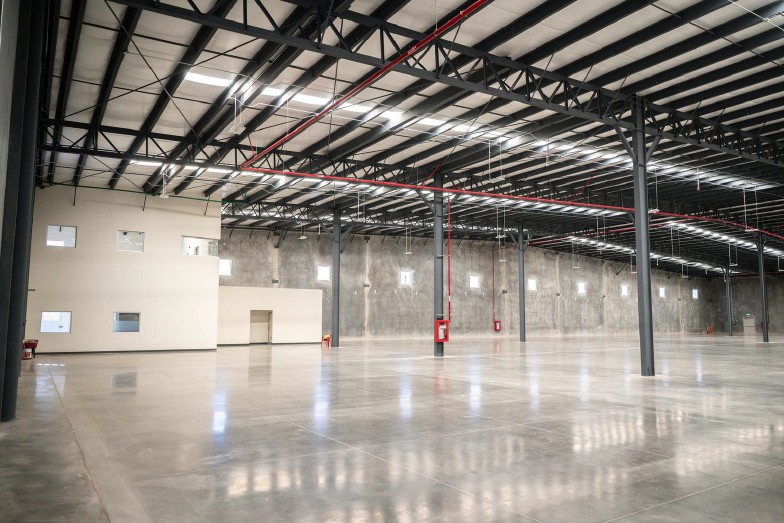
Class A Infrastructure Is Increasingly Essential
Modern manufacturing operations increasingly require:
- Class A industrial buildings
- higher clear heights
- scalable layouts
- truck maneuverability
- dock capacity
- and infrastructure flexibility.
Figure 3 – Modern Class A Industrial Infrastructure in Mexico
Industrial buildings must increasingly adapt to:
- automation
- logistics intensity
- advanced manufacturing
- and operational scalability.
Selecting inadequate industrial infrastructure can create:
- logistics inefficiencies
- operational bottlenecks
- and future expansion limitations.
Water Resilience Is Becoming a Major Industrial Variable
Water availability is becoming increasingly important across Mexico’s industrial markets.
Companies now evaluate:
- water supply
- discharge systems
- treatment capacity
- reuse infrastructure
- and hydrological resilience.
This is especially important in regions experiencing:
- rapid industrial expansion
- population growth
- and environmental pressure.
Industrial parks capable of maintaining operational continuity under water stress conditions will likely become increasingly attractive over the next decade.
ESG Requirements Are Reshaping Industrial Real Estate
Environmental and sustainability requirements increasingly influence industrial location decisions.
Global manufacturers increasingly require:
- environmental certifications
- sustainability reporting
- energy monitoring
- and ESG compliance capabilities.
According to AMPIP:
- most industrial developers now monitor energy consumption
- and a significant percentage of industrial facilities include environmental certifications.
For multinational companies, ESG readiness is becoming directly connected to:
- corporate governance
- investor expectations
- and operational strategy.
Industrial Park Distribution Reveals Mexico’s Strategic Corridors
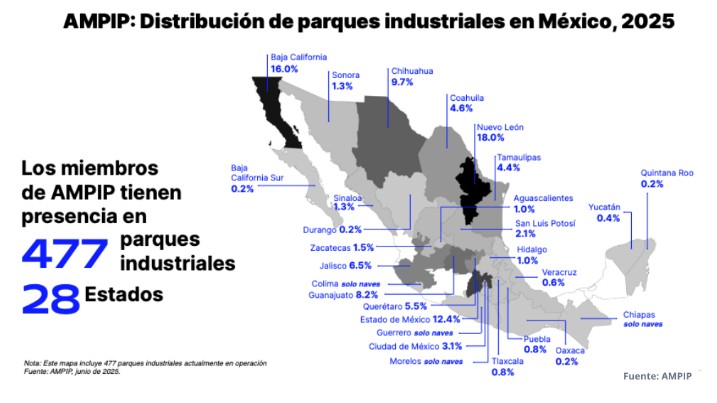
The industrial park distribution map clearly illustrates the concentration of manufacturing activity across strategic industrial corridors.
The strongest industrial states include:
- Nuevo León
- Baja California
- State of Mexico
- Chihuahua
- Querétaro
- and Guanajuato.
These regions benefit from:
- supplier ecosystems
- export connectivity
- logistics infrastructure
- and labor availability.
The map also highlights another important trend:
Industrial expansion is increasingly moving toward central Mexico as companies search for:
- scalability
- logistics diversification
- and operational flexibility beyond saturated northern markets.
States such as:
- Hidalgo
- State of Mexico
- and Querétaro
are becoming increasingly important within Mexico’s industrial growth strategy.
Why Site Selection Is Becoming a Competitive Advantage
Industrial site selection now directly affects:
- operational continuity
- logistics performance
- manufacturing flexibility
- and long-term scalability.
The most competitive manufacturing operations increasingly depend on:
- resilient infrastructure
- utility reliability
- mature industrial ecosystems
- and strategic logistics positioning.
Companies that properly evaluate these variables gain significant advantages in:
- operational efficiency
- risk mitigation
- and long-term manufacturing competitiveness.
Conclusion
Industrial site selection in Mexico is entering a new phase.
The combination of:
- nearshoring
- infrastructure pressure
- ESG requirements
- supply chain restructuring
- and operational complexity
is fundamentally changing how manufacturers evaluate industrial locations.
In 2026, companies are no longer selecting only an industrial building.
They are selecting:
- operational resilience
- infrastructure continuity
- logistics scalability
- and long-term manufacturing competitiveness.
For foreign investors entering Mexico, understanding these dynamics is becoming essential for successful industrial expansion.
FAQ
Why is industrial site selection becoming more strategic in Mexico?
Because manufacturers must now evaluate:
- energy infrastructure
- logistics resilience
- water availability
- ESG readiness
- and operational continuity,
not only location and labor costs.
Which industrial regions are strongest in Mexico?
The strongest industrial regions currently include:
- Northern Mexico
- Bajío
- and central Mexico logistics corridors.
Why are Class A industrial buildings increasingly important?
Modern manufacturing operations require:
- scalable infrastructure
- advanced logistics capability
- and operational flexibility.
Why is energy infrastructure becoming critical?
Nearshoring growth is rapidly increasing industrial electricity demand across Mexico’s manufacturing regions.
Why is central Mexico becoming more attractive?
Central Mexico offers:
- connectivity to national consumption markets
- logistics diversification
- and strong long-term industrial expansion potential.