Manufacturers in Mexico Remain Cautious Ahead of the 2026 USMCA Review
Manufacturing Investment Enters a Holding Pattern
Mexico’s manufacturing sector entered 2026 in a state of strategic caution. While demand fundamentals remain intact, many companies are pausing or slowing investment decisions due to uncertainty surrounding the upcoming USMCA (T-MEC) review.
According to Expo Manufactura, industry sentiment reflects a “wait-and-see” posture rather than a retreat. Manufacturers are still present, still planning — but moving more deliberately.
This caution follows a year in which the sector generated MXN 35.2 billion in the first quarter of 2025, with exports projected to grow 2% in 2026 despite a complex geopolitical backdrop.
Automotive Manufacturing: Slowing, Not Reversing
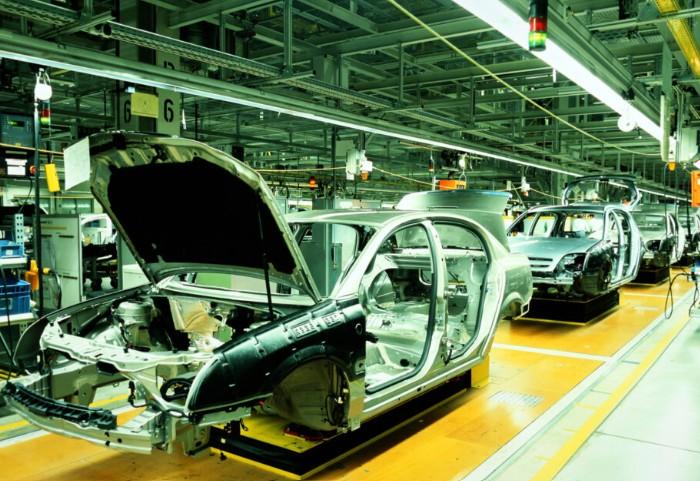
The automotive sector, which represents a cornerstone of Mexico’s industrial base, illustrates this dynamic clearly.
Vehicle sales produced domestically have faced pressure from a surge of imported Chinese vehicles. However, this has not eliminated demand for locally manufactured vehicles. Instead, concerns around after-sales support and spare parts availability are reinforcing confidence in vehicles produced within Mexico.
That said, any recovery in automotive investment is expected to be gradual, unfolding over months rather than quarters. Given the sector’s scale and capital intensity, uncertainty around trade rules has an outsized impact on timing decisions.
Technology Becomes the Strategic Lever
With manufacturing accounting for 21.4% of Mexico’s GDP, companies are increasingly turning inward — not to retreat, but to optimize.
The fastest-growing investment niches within manufacturing are:
- Automation
- Robotics
- Artificial intelligence (AI)
- Advanced machinery
Rather than expanding capacity aggressively, manufacturers are prioritizing efficiency per square meter, per worker, and per production line. This shift reflects a broader strategy: prepare for multiple trade outcomes while maintaining global competitiveness.
Nearshoring Is Still Active — Just More Selective
Despite uncertainty, nearshoring remains relevant. At Expo Manufactura, U.S. companies increased their participation by roughly 10% year over year, alongside firms from Canada, Germany, Japan, Korea, India, and China.
This confirms that Mexico continues to be viewed as a strategic manufacturing platform — but one where execution quality matters more than speed.
Companies are no longer asking whether to nearshore, but how to do so with lower regulatory, operational, and geopolitical risk.
Monterrey Remains the Industry Barometer
The upcoming edition of Expo Manufactura in Monterrey is expected to host:
- 15,000 professional visitors
- Over 460 exhibitors
- 28,000 square meters of exhibition space
Around 70% of attendees come from northern industrial states, with the remaining 30% from the Bajío. An exhibitor return rate above 80% signals that, despite uncertainty, manufacturers are still closing meaningful deals.
Heavy machinery valued at up to USD 1 million per unit continues to be transported across continents — a strong indicator that the sector remains active beneath the surface.
Conclusion: Caution Today, Capability Tomorrow
Mexico’s manufacturing sector is not pulling back — it is recalibrating.
As the 2026 USMCA review approaches, manufacturers are prioritizing technology, efficiency, and resilience over rapid expansion. Automation, robotics, and AI are becoming the tools that allow companies to stay competitive while navigating policy uncertainty.
For executives planning expansion into Mexico, the message is clear: this is a moment for preparation, not paralysis.
FAQ – Manufacturing, Nearshoring, and USMCA
Why are manufacturers cautious in 2026?
Because uncertainty around the USMCA review affects long-term investment planning.
Is nearshoring slowing down in Mexico?
No. It continues, but with more selective and efficiency-driven decisions.
Which technologies are gaining the most traction?
Automation, robotics, and AI are the fastest-growing investment areas.
Is the automotive sector still relevant?
Yes. It remains central, though recovery is expected to be gradual.
Why does this matter for expansion planning?
Companies that invest in efficiency now will be better positioned once trade clarity returns.