How Mexico Overtook China as the United States’ Top Trade Partner

Executive Summary
Mexico is no longer simply a low-cost manufacturing destination. In 2025, the country consolidated its position as the United States’ largest trading partner, surpassing China and strengthening North America’s role as the world’s most integrated industrial region.
This shift reflects much more than temporary tariff changes. It is the result of:
- USMCA integration
- nearshoring strategies
- regional supply chain restructuring
- geopolitical diversification
- and decades of manufacturing integration between Mexico, the United States, and Canada.
For foreign investors and manufacturers, this transformation confirms that manufacturing in Mexico is increasingly becoming a strategic long-term decision rather than only a cost-driven alternative.
Mexico Becomes the Leading Supplier to the United States
Between 2020 and 2025, Mexico increased its share of U.S. imports while China lost significant participation in the American market.
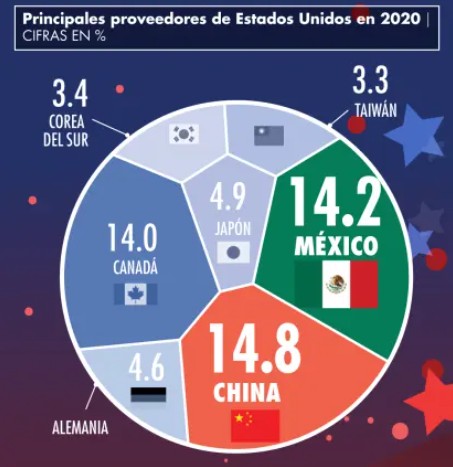
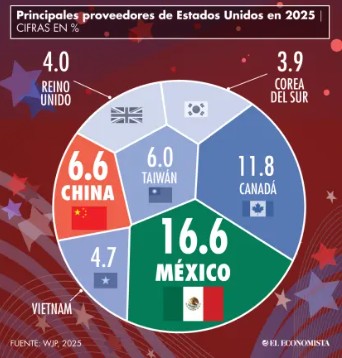
Mexico surpasses China as largest supplier to the United States in 2025
The data shows a major restructuring of global trade flows:
- Mexico increased from 14.2% to 16.6%
- China declined from 14.8% to 6.6%
- Canada remained stable as a strategic North American partner
This evolution demonstrates how North American supply chains are becoming more regionalized and integrated.
The transformation accelerated due to:
- tariffs on Chinese goods
- geopolitical tensions
- supply chain disruptions
- and the need for manufacturing resilience.
USMCA Became the Foundation of Nearshoring in Mexico
The USMCA agreement is now the institutional backbone of nearshoring in Mexico.
According to trade and financial institutions, the upcoming USMCA review is expected to strengthen rather than weaken regional integration.
The agreement continues supporting:
- tariff stability
- regional production
- investment certainty
- and integrated manufacturing operations across North America.
For global manufacturers, this legal and commercial framework remains one of Mexico’s strongest competitive advantages.
Why Companies Continue Moving Production to Mexico
Proximity to the United States
One of Mexico’s biggest advantages is geographic proximity.
Compared to Asian manufacturing, Mexico allows:
- shorter delivery times
- lower transportation costs
- reduced inventory exposure
- and faster operational adjustments.
This has become increasingly important in industries such as:
- automotive
- electronics
- aerospace
- medical devices
- and industrial manufacturing.
Supply Chain Resilience
Global disruptions exposed the risks of overly centralized supply chains.
Many manufacturers realized that depending heavily on Asia created vulnerabilities related to:
- shipping delays
- geopolitical conflicts
- tariffs
- and logistics disruptions.
As a result, companies increasingly prioritize:
- regional manufacturing
- dual sourcing strategies
- and North American supply chain integration.
Mexico benefits directly from this structural transformation.
Manufacturing Ecosystem Maturity
Mexico’s manufacturing sector did not emerge overnight.
The country has spent decades developing:
- industrial parks
- supplier ecosystems
- export infrastructure
- engineering talent
- and operational know-how.
This is particularly visible in:
- Nuevo León
- Querétaro
- Guanajuato
- Coahuila
- Chihuahua
- Tamaulipas
- and Jalisco.
These regions now operate as integrated industrial ecosystems connected directly to U.S. manufacturing networks.
The USMCA Review Is Expected to Reinforce North America
The upcoming USMCA review represents a critical moment for North American trade integration.
However, most analysts expect continuity rather than disruption.
Financial institutions and trade organizations increasingly view the agreement as strategically essential due to:
- geopolitical competition
- energy security
- semiconductor production
- critical minerals
- and industrial resilience.
The review process is therefore increasingly focused on:
- updating supply chain rules
- strengthening competitiveness
- reducing operational risks
- and improving regional coordination.
According to Citi, once uncertainty surrounding the review decreases, a new acceleration of productive investment in Mexico could emerge.
North America Is Becoming a Strategic Industrial Bloc
The geopolitical environment continues pushing the United States toward stronger regional integration.
North America now represents:
- one of the world’s largest manufacturing blocs
- highly integrated industrial supply chains
- and one of the strongest consumer markets globally.
This strategic alignment extends beyond trade.
It increasingly includes:
- energy infrastructure
- semiconductors
- logistics
- critical minerals
- industrial security
- and technology manufacturing.
As a result, Mexico’s role within North America continues becoming more important.
Infrastructure Remains One of Mexico’s Biggest Challenges
Despite strong momentum, Mexico still faces structural bottlenecks that could limit future growth.
Industrial organizations continue highlighting challenges related to:
- energy infrastructure
- water availability
- transportation systems
- security
- and specialized labor availability.
These limitations are particularly important for:
- large-scale manufacturing projects
- data centers
- automotive plants
- and advanced industrial operations.
This explains why infrastructure investment is becoming increasingly critical for sustaining nearshoring growth.
Plan México and Infrastructure Investment Could Accelerate Growth
Mexico’s federal infrastructure initiatives are expected to play an important role in future industrial expansion.
According to financial sector executives, projects linked to:
- logistics
- energy
- ports
- highways
- rail
- and industrial infrastructure
could unlock additional manufacturing investment before the USMCA review is fully concluded.
This is particularly relevant because companies increasingly evaluate:
- operational reliability
- infrastructure scalability
- and utility stability
before selecting manufacturing locations.
Nearshoring Is Evolving Into “Nearshoring 2.0”
The first wave of nearshoring focused heavily on relocating production capacity.
The next phase may focus more on:
- supply chain integration
- advanced manufacturing
- automation
- regional sourcing
- and strategic industrial ecosystems.
Some analysts already describe this transition as:
“Nearshoring 2.0”
This phase is expected to generate:
- more sophisticated manufacturing operations
- larger capital investments
- and deeper North American integration.
Mexico is positioned to become one of the main beneficiaries.
Why This Matters for Foreign Investors
For international companies, the shift from China toward Mexico changes the strategic logic of manufacturing decisions.
Mexico is increasingly viewed as:
- a North American manufacturing platform
- an export hub
- and a long-term industrial investment destination.
The most successful projects are typically those that prioritize:
- industrial ecosystem maturity
- logistics connectivity
- infrastructure quality
- and workforce availability.
The conversation is no longer simply:“Where is labor cheaper?”
The real question is increasingly:“Which industrial ecosystem creates the most resilient and scalable operation?”
Conclusion
Mexico’s rise as the United States’ largest trading partner reflects a profound transformation in global manufacturing and supply chain strategy.
USMCA integration, geopolitical diversification, and regional manufacturing resilience continue strengthening Mexico’s role inside North America.
Although infrastructure and operational challenges remain, the long-term trend continues favoring:
- manufacturing in Mexico
- regionalized supply chains
- and deeper North American industrial integration.
For global investors, the message is increasingly clear:
Mexico is no longer an alternative manufacturing location. It is becoming one of the central pillars of North American industrial strategy.
FAQ
Why did Mexico surpass China as a U.S. trading partner?
Mexico benefited from:
- nearshoring
- USMCA integration
- tariff shifts
- and supply chain diversification away from Asia.
What is driving nearshoring in Mexico?
The main drivers include:
- proximity to the United States
- lower logistics costs
- geopolitical diversification
- and supply chain resilience.
Will the USMCA agreement continue?
Most analysts and financial institutions expect the agreement to continue and potentially strengthen regional integration.
Which industries are benefiting most from nearshoring?
Key sectors include:
- automotive
- electronics
- aerospace
- medical devices
- logistics
- and industrial manufacturing.
What are Mexico’s biggest nearshoring challenges?
The main challenges include:
- energy infrastructure
- water availability
- transportation bottlenecks
- security
- and specialized labor shortages.