Mexico’s Railway Renaissance: How New Rail Projects Could Transform Supply Chains and Nearshoring

Executive Summary
For decades, Mexico’s transportation system has been dominated by trucks and highways. Railways, once central to the country’s economic development, gradually lost importance during the second half of the twentieth century.
Today, however, Mexico is entering a new phase of railway investment. Large infrastructure projects launched under former President Andrés Manuel López Obrador and expanded under President Claudia Sheinbaum aim to modernize the country’s rail system and strengthen connectivity between industrial hubs.
Several railway initiatives—including the Maya Train, the Interoceanic Corridor, new intercity rail lines, and planned rail connections toward the U.S. border—are expected to reshape transportation networks across the country.
For companies evaluating nearshoring in Mexico, these investments are particularly relevant because improved rail infrastructure can strengthen supply chains, reduce logistics costs, and enhance connectivity between manufacturing hubs and export markets.
The Historical Role of Railways in Mexico
Railroads played a crucial role in Mexico’s economic development during the late nineteenth and early twentieth centuries.
The country’s railway expansion accelerated during the presidency of Porfirio Díaz (1876–1911), when thousands of kilometers of track connected remote regions with major cities and industrial centers. Railways became essential for transporting raw materials, agricultural goods, and manufactured products across the country.
By the mid-twentieth century, however, rail transport began to decline as Mexico invested heavily in highways and road infrastructure. Freight and passenger transportation increasingly shifted to trucks and automobiles.
By the 1990s, the national railway operator Ferrocarriles Nacionales de México faced severe financial challenges. Inefficiencies, high operating costs, and declining passenger demand made the system unsustainable.
In 1997 Mexico privatized its railways, allowing private operators to manage freight rail services while the government retained ownership of the rail infrastructure.
This reform significantly improved freight rail efficiency but also eliminated most passenger train services across the country.
Freight Rail: A Hidden Backbone of Mexico’s Trade
Although passenger trains largely disappeared, freight rail became an important part of Mexico’s logistics network.
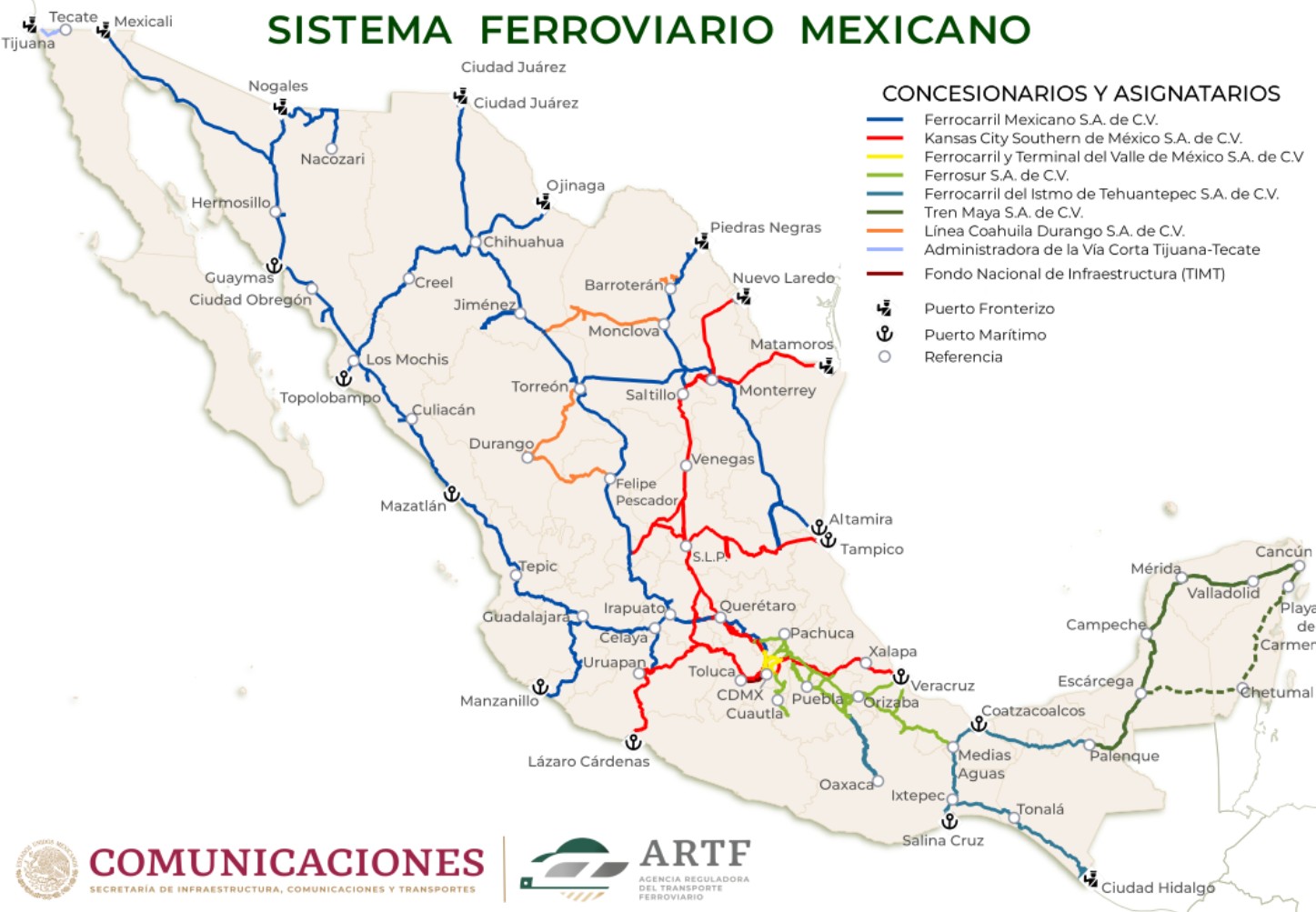
Today, Mexico’s freight rail system is primarily operated by three major companies:
- Ferromex
- Kansas City Southern de México (KCSM), now part of Canadian Pacific Kansas City (CPKC)
- Ferrosur
These operators manage thousands of kilometers of rail lines connecting manufacturing centers with ports and border crossings.
Rail transport plays a critical role in moving goods such as:
- automobiles and automotive components
- agricultural products
- steel and industrial materials
- cement and construction materials
- chemicals and energy products
Mexico’s freight rail network is particularly important for cross-border trade with the United States, where rail shipments support integrated North American supply chains.
A New Wave of Railway Investment
Mexico’s railway infrastructure is now entering a new phase of modernization.
The current federal government has announced plans to build or modernize up to 3,000 kilometers of rail lines across the country. These projects aim to improve both passenger mobility and freight logistics.
Railway expansion forms part of a broader national development strategy known as Plan México, which focuses on strengthening infrastructure, trade connectivity, and industrial competitiveness.
The government has allocated approximately USD 7.5 billion in initial investments to launch several major rail projects.
Major Railway Projects in Mexico
Several large railway initiatives are currently under construction or in development.
These projects could significantly reshape Mexico’s transportation infrastructure.
Mexico City – Querétaro High-Speed Rail
One of the most important projects currently under development is the Mexico City–Querétaro rail line.
Querétaro is one of Mexico’s most dynamic industrial regions, hosting major aerospace, automotive, and manufacturing clusters.
The planned railway aims to:
- reduce travel time between the two cities from more than four hours by road to roughly two hours
- improve connectivity between central Mexico’s industrial corridor and the capital
- support both passenger mobility and business travel
Improved connectivity could strengthen the region’s attractiveness for industrial investment.
Mexico City – Pachuca Rail Line
Another key project is the Mexico City–Pachuca rail corridor, which will connect the capital with the state of Hidalgo.
The route covers roughly 90 kilometers and is expected to provide a faster alternative to congested highways.
Hidalgo has become an emerging industrial location, particularly for rail manufacturing and transportation equipment.
For example, the global rail manufacturer Alstom operates a major production facility in Ciudad Sahagún, where trains for the Maya Train project were produced.
The Maya Train (Tren Maya)
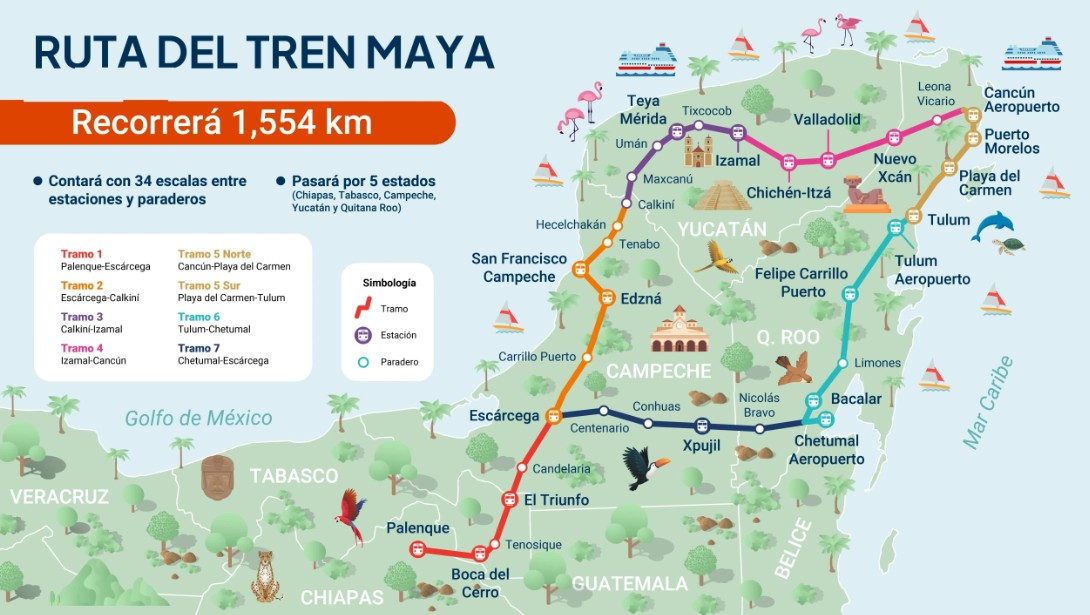
The Maya Train is one of the largest infrastructure projects undertaken in Mexico in recent decades.
The railway stretches approximately 1,500 kilometers across the Yucatán Peninsula and connects major cities and tourist destinations including:
- Cancún
- Mérida
- Campeche
- Palenque
The project required an investment estimated at around USD 30 billion.
Although the train is primarily designed for passenger travel and tourism, it also includes freight capacity that could support regional supply chains in southern Mexico.
The Interoceanic Corridor Railway
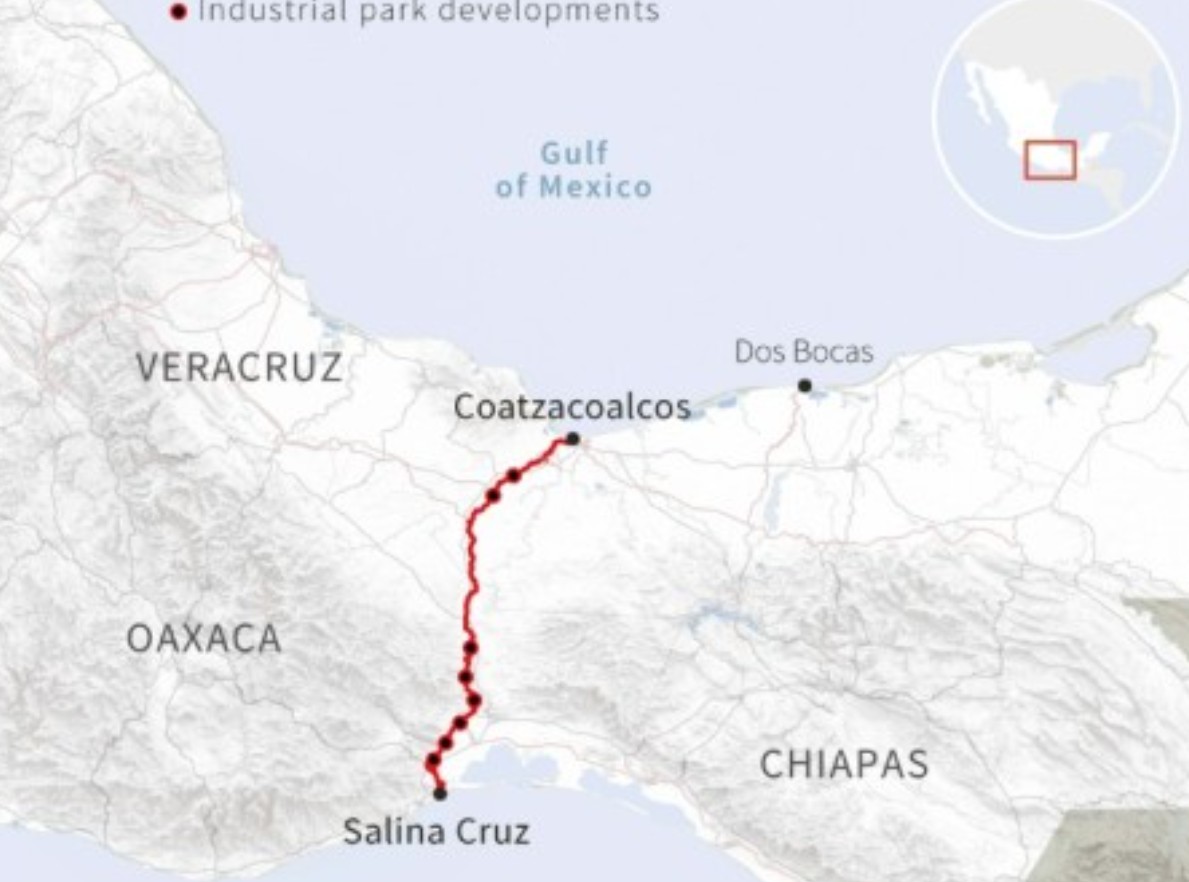
Another strategically important project is the Interoceanic Corridor of the Isthmus of Tehuantepec.
This railway connects ports on the Pacific Ocean and the Gulf of Mexico, creating a logistics corridor that could serve as an alternative trade route between Asia and North America.
The corridor links:
- Port of Salina Cruz (Pacific)
- Port of Coatzacoalcos (Gulf of Mexico)
Combined with port modernization and industrial development zones along the corridor, this project aims to strengthen Mexico’s role as a global logistics hub.
Rail Connections Toward the U.S. Border
Future railway expansion plans also include connections to major northern industrial hubs.
Proposed routes could link central Mexico with cities such as:
- Monterrey
- Nuevo Laredo
- Nogales
- Guadalajara
These corridors could significantly improve freight transportation between manufacturing centers and U.S. markets.
For nearshoring companies, stronger rail connectivity can reduce logistics costs and increase supply chain reliability.
Why Rail Infrastructure Matters for Nearshoring
Rail transport offers several advantages that are particularly relevant for industrial supply chains.
Compared with road transport, railways typically provide:
- higher freight capacity
- lower emissions
- lower fuel consumption
- greater cost efficiency for bulk transport
Railways can also reduce highway congestion and improve long-distance freight efficiency.
As nearshoring continues to expand manufacturing in Mexico, logistics infrastructure will become even more important for supporting industrial growth.
Rail corridors connecting manufacturing hubs with ports and border crossings could play a critical role in strengthening Mexico’s position within North American supply chains.
Challenges and Risks
Despite the ambitious vision for railway expansion, several challenges remain.
Large infrastructure projects often face risks such as:
- construction delays
- cost overruns
- environmental concerns
- financing constraints
Some projects, including the Mexico City–Toluca Interurban Train, have experienced significant delays and cost increases.
Environmental concerns have also been raised around the Maya Train project, particularly regarding construction impacts in sensitive ecosystems.
Ensuring transparency, financial sustainability, and long-term operational planning will be essential for the success of Mexico’s railway modernization.
What This Means for Investors
For companies expanding manufacturing operations in Mexico, transportation infrastructure is a key factor in supply chain planning.
While highways will remain the dominant transport mode for many industries, rail infrastructure could increasingly support long-distance freight transport.
Improved railway connectivity can strengthen:
- cross-border logistics
- port connectivity
- industrial corridor development
- supply chain resilience
For global manufacturers serving North American markets, these developments reinforce Mexico’s long-term role as a strategic production platform.
FAQ – Rail Infrastructure in Mexico
Does Mexico have an active railway system?
Yes. Mexico operates an extensive freight rail network that supports cross-border trade with the United States. Passenger rail services are now gradually returning through new infrastructure projects.
What major rail projects are currently under development in Mexico?
Major projects include the Maya Train, the Interoceanic Corridor railway, and new intercity lines connecting Mexico City with Querétaro and Pachuca.
Why are railways important for nearshoring?
Railways improve logistics efficiency, reduce transportation costs for large shipments, and strengthen connectivity between manufacturing hubs and export markets.
Will railways replace trucks in Mexico?
No. Trucks will remain the dominant transport mode, but railways can complement road transport for long-distance freight and bulk cargo.