Nearshoring Creates More Jobs in Mexico — But Not Better Wages
Introduction: Growth Without Prosperity?
Nearshoring has become one of the most frequently cited drivers of Mexico’s manufacturing expansion. Thousands of jobs have been created as foreign companies relocate production closer to the United States. However, a critical question remains unanswered: Has nearshoring improved income levels for Mexican workers — or merely expanded low-wage employment?
Recent research suggests that while nearshoring has boosted manufacturing employment, wage growth has remained largely stagnant. For executives evaluating Mexico as a long-term production base, this raises important questions about productivity, labor sustainability, and social stability.
Nearshoring and Mexico’s Historical Labor Model
For decades, Mexico positioned itself as a low-cost labor destination to attract foreign investment. This strategy successfully integrated the country into global supply chains but also resulted in persistent wage gaps compared to key trading partners.
The concept of nearshoring modernized this narrative, framing Mexico not just as a low-cost location but as a strategic manufacturing partner. However, recent evidence suggests that the underlying labor dynamics have changed less than expected.
What the Data Shows: Employment Up, Wages Flat
A study by Banco de México analyzed the first wave of nearshoring between 2020 and 2023, focusing on its impact on manufacturing employment and wages.
Key findings:
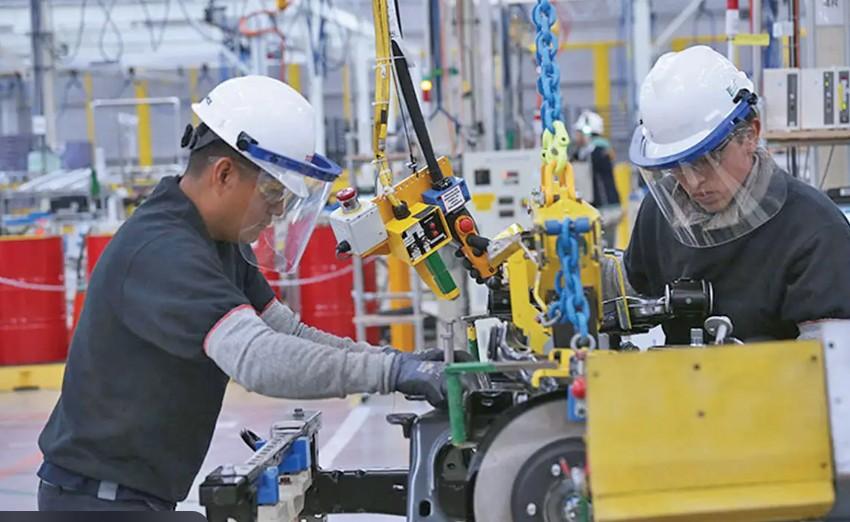
- Manufacturing sectors with high nearshoring exposure recorded up to 6.2% higher employment growth
- Wage impact was minimal
- Aggregate wage increase: +0.69%
- Disaggregated impact: -0.005%
- Productivity gains were moderate (approx. +4.6%), but not shared with workers
In simple terms: more jobs were created, but incomes barely moved.
Productivity Gains Without Wage Growth: A Structural Risk
One of the study’s most concerning conclusions is the disconnect between productivity and compensation. When productivity rises but wages remain flat, value creation concentrates primarily in capital rather than labor.
From a strategic perspective, this creates several risks:
- Reduced long-term labor motivation
- Higher employee turnover
- Social and political pressure for wage reform
- Potential erosion of Mexico’s attractiveness as a stable manufacturing base
The central bank explicitly warns against repeating the maquiladora-era model, which delivered scale but failed to generate broad-based income growth.
Why This Matters for Executives and Investors
For CEOs, COOs, and operations leaders, wage stagnation is not just a social issue — it is a strategic variable.
Key implications:
- Labor availability alone is not enough if skill development and wage progression lag
- Long-term productivity depends on workforce upgrading, not cost suppression
- Manufacturing locations with poor wage dynamics may face future regulatory or labor disruptions
- Nearshoring strategies must align with human capital development, not only cost arbitrage
Nearshoring vs. Development: The Strategic Choice
Nearshoring has the potential to become a development engine — but only if Mexico moves beyond being a low-wage platform.
That requires:
- Investment in technical training and upskilling
- Technology transfer into higher-value manufacturing
- Wage growth aligned with productivity
- Industrial policies that reward innovation, not just headcount
Without these shifts, nearshoring risks being remembered as a missed opportunity rather than a transformation.
Conclusion: Nearshoring Is Not Enough on Its Own
Nearshoring in Mexico is generating employment — but employment quality remains the real challenge.
For decision-makers, the message is clear:Mexico’s competitiveness will increasingly depend not on how many jobs it creates, but on how sustainable, skilled, and productive those jobs become.
Companies that integrate workforce development into their nearshoring strategy will be better positioned for long-term operational stability.
FAQ
Does nearshoring increase employment in Mexico?
Yes. Manufacturing sectors with high nearshoring exposure have shown above-average job growth since 2020.
Has nearshoring improved wages for workers?
So far, wage growth has been minimal despite rising employment and modest productivity gains.
Why is wage stagnation a concern for investors?
Because it can lead to labor instability, regulatory pressure, and long-term competitiveness risks.
Can nearshoring still succeed in Mexico?
Yes — but only if it evolves from a cost-driven model into a productivity- and skills-based development strategy.