When the Power Fails: Mexico’s Electricity Challenge for Data Center Growth
As Mexico positions itself as a data center hub, particularly under the push of nearshoring and AI growth, one core issue looms large: electricity availability and grid stress. Demand is racing ahead of infrastructure, forcing many operators to adopt costly workarounds. If the country wants its data center industry in Mexico to flourish sustainably, it must face the energy obstacle head-on.
The Electricity Gap vs. Data Center Demand
Booming Demand, Weak Grid
The surge in AI, cloud workloads, and nearshoring is projected to drive data center power demand in Mexico to around 3 GW by 2030, equivalent to 6% of Mexico’s 2023 peak demand. Many new data centers are earmarked for AI workloads — 43% of forthcoming facilities will support AI operations — but the current energy infrastructure may not keep pace.
Microsoft’s facility in Colón offers a cautionary tale: unable to plug fully into the grid, it had to rely partially on gas generators. This scenario is increasingly common: as energy demand outpaces grid upgrades, data centers are turning to backup power as a stopgap.
Supply Constraints & Grid Stress
Mexico's power grid faces structural constraints: reserve margins have dipped to critically low levels, and infrastructure investment in transmission and distribution lags behind demand growth. Some regions report minimal expansion of transmission lines—just 0.1% growth in a year—while electricity demand jumped 3.5%.
Further, Mexico plans to split its main grid into northern and southern zones by 2028 to better localize capacity and encourage investment. But that change may come too late for many data center projects already in the pipeline.
Coping Strategies: How Data Centers Manage the Electricity Crisis
On-Site Power Infrastructure
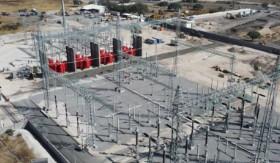
To hedge against grid instability, leading operators are building their own generation and transmission assets. Microsoft invested in a distribution substation in Querétaro, while CloudHQ is constructing a 400 kV line to serve its campus. In essence, these firms are turning infrastructure costs into competitive necessities.
Flexible Cooling & Water Use
Data centers with water-based cooling can strain local water supplies, especially in drought-prone areas like Querétaro. Some operators are adopting air-cooling, closed-loop systems, or hybrid approaches to reduce water dependency.
Renewable Power & Storage
Mexico’s installed solar capacity was about 11.99 GW in 2024, generating roughly 7.6% of total electricity. But to power data centers reliably via renewables, you need battery storage and smart grid integration; without them, new solar capacity risks being wasted or “curtailed.”
Data center operators are increasingly exploring Power Purchase Agreements (PPAs) with solar or wind generators, but many such contracts hinge on grid connectivity and policy stability.
Why This Matters for Mexico’s Digital Future
If electricity supply fails to scale, Mexico risks losing data center investment to more stable markets. Grid fragility increases costs, raises reliability risks, and forces reliance on carbon-intensive fallback sources.
Yet, this challenge also defines opportunity: regions that manage to combine renewables, storage, and regulatory enablement will be winners in the race for digital infrastructure supremacy.